


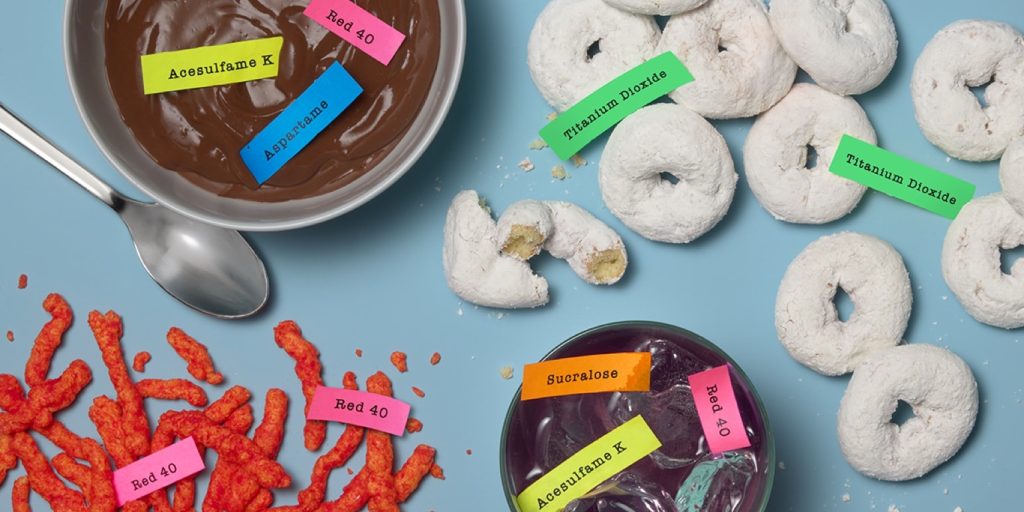
Photo: Scott Meadows / Consumer Reports
Yuka partnered with Consumer Reports to produce this investigation. Consumer Reports is an independent, nonprofit, ad-free member organization that works side by side with consumers for truth, transparency, and fairness in the marketplace. Together, the organizations decided on the products and substances to test and then compared the amounts detected against daily safety levels established by U.S. and European public health agencies, including the FDA, the European Food Safety Authority, and California’s Office of Environmental Health Hazard Assessment, and levels of concern identified in peer-reviewed scientific studies. Then, a team of scientists analyzed the resulting data to calculate a “hazard quotient,” or the level below which no adverse health effects would be expected to occur, for each of the substances, taking into account a lifetime of chronic exposure. CR contributed its scientific and investigative expertise and experience working on food safety regulatory issues. The organization also contributed graphics and design to the effort.
From breakfast cereals and sodas to snacks and desserts, food additives have become ubiquitous in the American food supply. These substances are commonly used to enhance taste, texture, shelf life, or appearance, but a growing body of scientific research has raised concerns about the potential health effects of some widely used additives.
Yet many of these substances remain prevalent in the United States, despite being banned or more strictly regulated in Europe and other parts of the world.
Against this backdrop, Yuka and Consumer Reports conducted an investigation into the levels of several controversial additives found in everyday food products sold across the United States. We analyzed 40 popular products consumed by millions of Americans, including many children.
The findings are alarming: one quarter of the products tested contained additive levels in a single serving that exceeded daily safety levels identified by U.S. or European public health agencies. When considering broader scientific evidence, nearly two thirds of the 40 products tested (25 products) contained at least one additive exceeding levels of concern identified in respected peer-reviewed studies.
Discover the full results of our investigation and learn which products raised the greatest health concerns.
Why Additives Are a Growing Health Concern
Food additives are everywhere on supermarket shelves, especially in the United States. According to a Yuka analysis of more than one million food products across eight countries, American products contain an average of 3.14 additives per product; twice as many as products sold in Italy, 68% more than in France, and 24% more than in Canada1.
These substances, generally of synthetic origin, are added by manufacturers to serve a variety of technological purposes: enhancing flavor, modifying texture, extending shelf life, or improving visual appeal. Preservatives, colorings, sweeteners, and texture agents are therefore widely used in processed foods consumed daily by millions of Americans. However, a growing body of scientific research has associated some of these additives with potential health risks.
One major issue is that U.S. regulations often rely on safety evaluations conducted decades ago, with little meaningful reassessment in light of new scientific evidence. Since then, research methods have evolved considerably, and recent studies have identified toxic effects that were undetectable during the original evaluations2.
In response to these concerns, several health authorities around the world have taken stronger regulatory action. The European Union has banned titanium dioxide in food since 2022 and requires warning labels on products containing certain artificial colorings3,4. Canada regularly updates the maximum permitted limits for several additives in order to better protect consumers5. In California, an official report published in 2021 led to the upcoming ban of Red 40 in public schools6. In 2023, the World Health Organization also advised against using artificial sweeteners for weight loss due to the lack of demonstrated long-term benefits7. No comparable federal measures, however, have been adopted in the United States.
As a result, the U.S. imposes far fewer restrictions than Europe on substances whose risks are nonetheless documented. Among the 50 most commonly used additives identified by Yuka as presenting some level of concern, 38% are not subject to any enforceable limit on the quantity permitted in food products in the United States, compared with just 14% in the European Union8.
Finally, many new additives are now introduced through a regulatory loophole called “GRAS” (“generally recognized as safe”). This system allows manufacturers to use certain substances without prior independent evaluation by the FDA, and in some cases, without even notifying the agency. According to an investigation by the Environmental Working Group, nearly 99% of the new substances added to food since the 2000s were introduced through this mechanism9-12.
In the absence of strong and consistent federal regulations on food additives, our two organizations conducted laboratory analyses to measure additive concentrations in food products that are especially popular among American consumers. The results were then compared against the most protective health-based thresholds currently used by public health authorities around the world, as well as with broader levels of concern identified in respected peer-reviewed scientific studies.
How We Conducted Our Tests
We first identified the eight additives presenting the highest levels of health concern based on the available scientific evidence. This selection was based both on the strength of the evidence regarding their health effects and on data indicating that part of the population may be exposed to them at concerning levels. The additives selected were acesulfame-K, aspartame, BHA, BHT, Red 40, sodium nitrite, sucralose, and titanium dioxide.
We then selected 40 very popular food products in the United States using scan data collected through the Yuka app. The products tested spanned several major categories, including pastries and sweet baked goods, ice cream and frozen desserts, confectionery, snacks, gelatins and puddings, processed meats, chips and potato-based products, and yogurts. The beverages analyzed included sodas, sports drinks, flavored drinks, energy drinks, and fruit juices.
Samples of each of these products were then analyzed by an ISO 17025-accredited laboratory, the international reference standard ensuring the reliability of analytical methods and the quality of implemented procedures13.
Finally, the measured concentrations were compared with daily safety thresholds identified by U.S. or European public health agencies for both adults and children, as well as with levels of concern identified in respected peer-reviewed studies.
👉 See the full methodology details
Red 40 : concerning levels for children found in 5 products
Among the 13 products analyzed, five contained enough Red 40 to exceed, in a single serving, the daily safety level for children identified by the California Office of Environmental Health Hazard Assessment (OEHHA)14. Even more concerning, three of these products contained levels high enough to also exceed the daily safety level identified for adults.
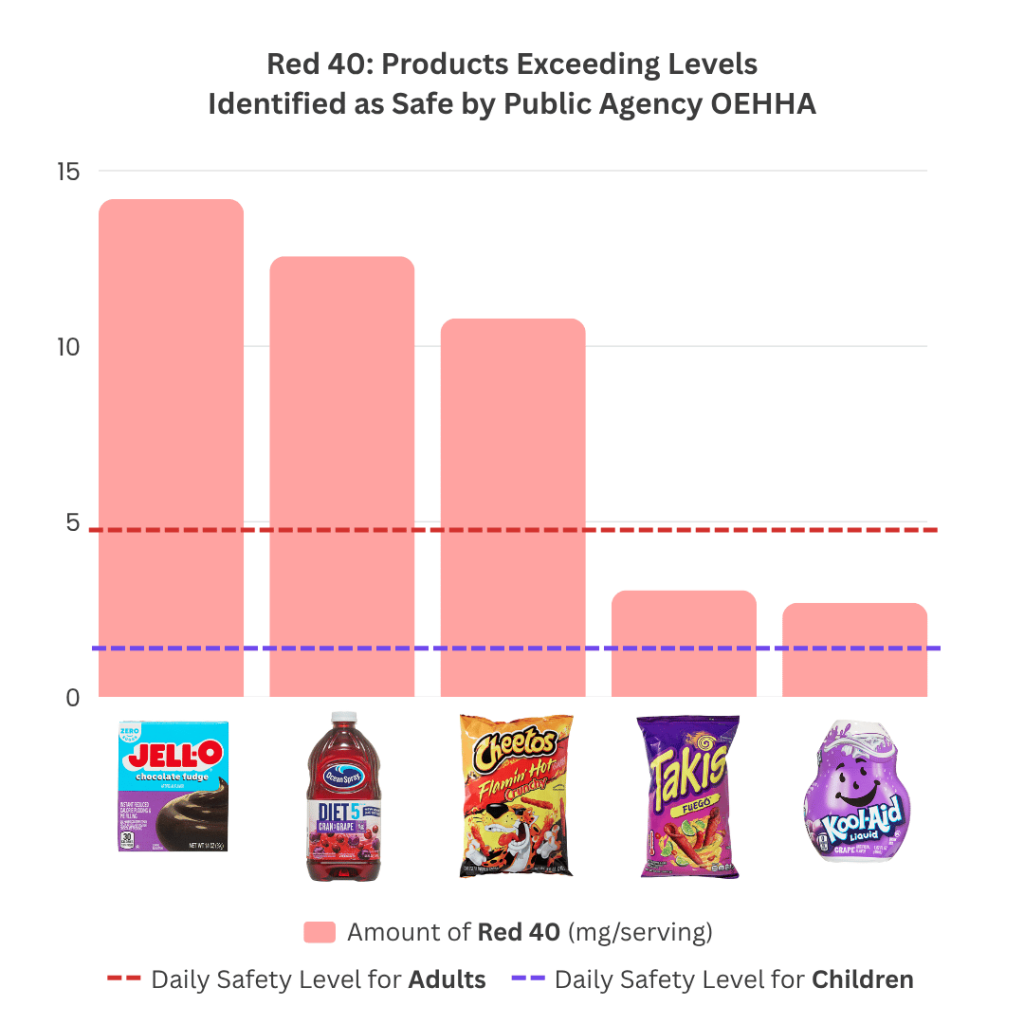
We calculated separate risk levels for children and adults based on average body weights. The daily safety level is lower for children because of their lower body weight: for the same amount consumed, their exposure is proportionally much higher than that of an adult, who may weigh three to four times more. As a result, a quantity of Red 40 considered acceptable for an adult may still raise concerns for a child.
In addition, recent scientific evidence suggests that children may be biologically more vulnerable to the neurological effects of this coloring, as their brains are still developing. Several studies indicate that chronic exposure to Red 40 may contribute to behavioral changes, including hyperactivity and attention disorders15,16.
Researchers believe these effects may result in part from disruptions to neurotransmitter function, the chemical messengers that enable communication between neurons. Such disruptions could have lasting effects on behavior, attention, and concentration in some children who are regularly exposed17-19.
Titanium dioxide : extremely high levels found in one very popular product
Testing revealed major differences in the quantities of titanium dioxide present across the four products analyzed.
One product stood out dramatically: Hostess’ Donettes, Mini Powdered Donuts contained 261 milligrams of titanium dioxide in a single serving, representing more than 760 times the combined amount found in the three other products tested that contained this additive.
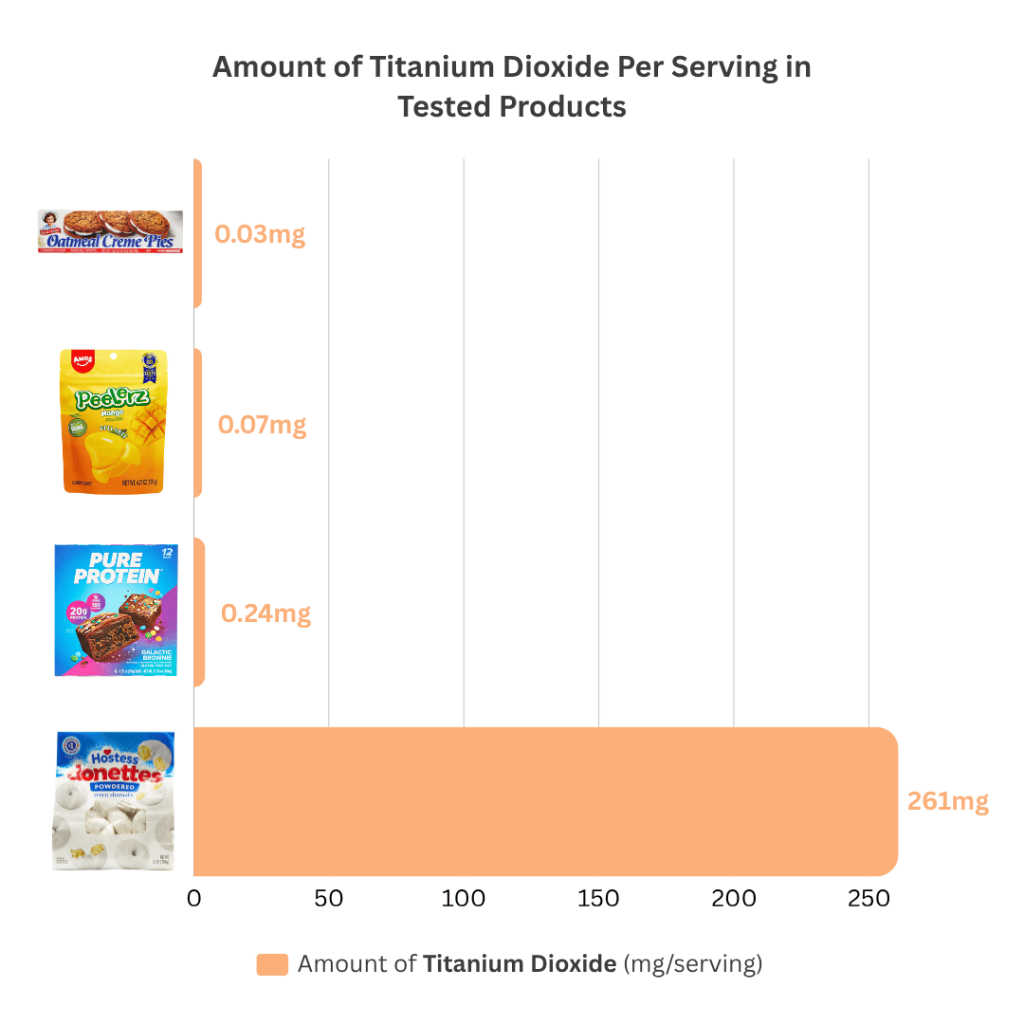
These findings raise serious concerns. Titanium dioxide, a synthetic white coloring agent, was banned in food products in the European Union in 2022 due to concerns about genotoxicity, meaning its potential to induce breaks in DNA strands and cause chromosomal damage3. Following a comprehensive scientific reassessment in 2021, the European Food Safety Authority (EFSA) concluded that titanium dioxide “can no longer be considered as safe when used as a food additive”20.
The levels identified in Hostess’ Donettes are especially troubling given how widely consumed this product is in the United States, particularly among children.
Artificial sweeteners : widespread exposure associated to chronic disease concerns
We tested 21 products for the presence of three widely used artificial sweeteners: acesulfame-K, aspartame, and sucralose. None of the products contained amounts exceeding the Acceptable Daily Intake (ADI) currently established by the FDA or the European Food Safety Authority21,22.
However, the findings become far more concerning when viewed in light of recent peer-reviewed epidemiological research, notably the analyses of the NutriNet-Santé cohort23-25. Nineteen of the 21 products tested contained enough of at least one sweetener in a single serving to exceed broader levels of concern associated in these epidemiological studies with an increased risk of adverse health outcomes, including cancer, cardiovascular disease, or type 2 diabetes.
A growing body of scientific literature supports these concerns, including in vitro studies on cells, animal studies, as well as epidemiological and clinical studies in humans. Many of the most methodologically robust studies now point to two major conclusions: first, that artificial sweeteners do not provide long-term benefits for reducing body fat in either adults or children; and second, that “there may be potential undesirable effects from long-term use” of those artificial compounds, particularly an increased risk of chronic diseases7.
Two major categories of products were analyzed for their sweetener content:
- beverages, including “light” or “zero sugar” sodas, sports and energy drinks, and fruit juices
- “light” or “sugar-free” products intended as alternatives to traditional sweet snacks
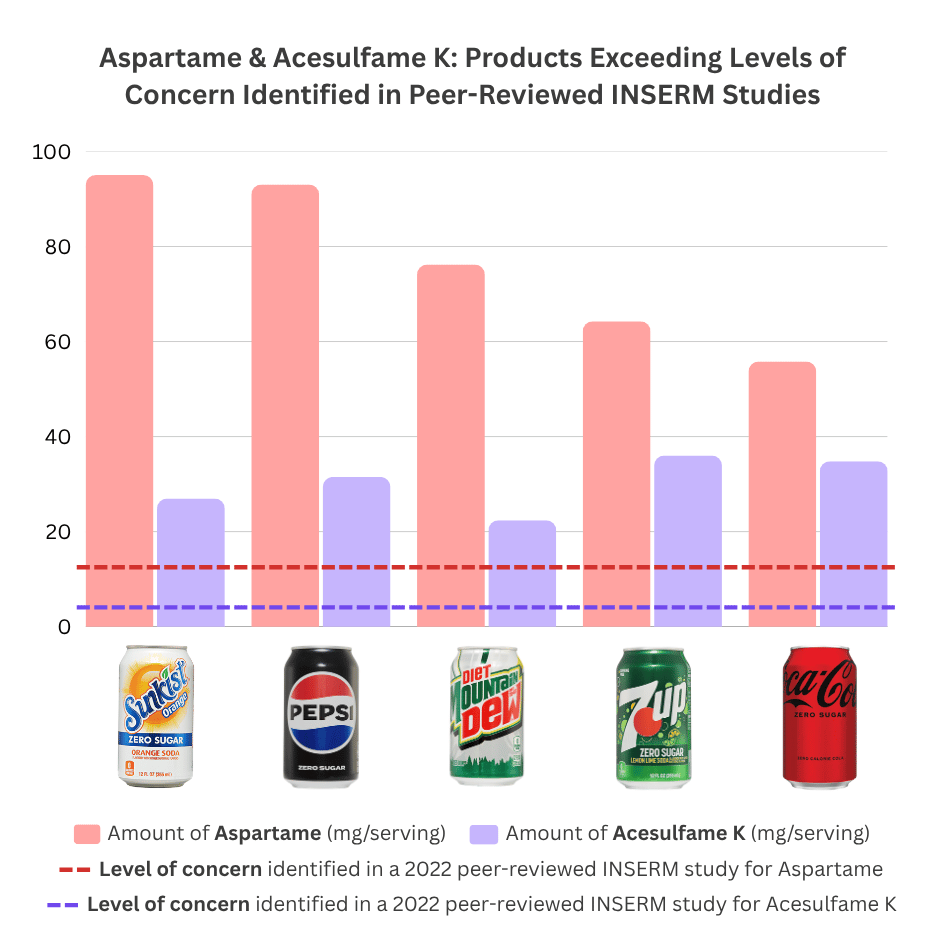
Among the beverages analyzed, the most concerning amounts of acesulfame-K and aspartame were found in sugar-free sodas from major brands such as Pepsi, Sunkist, Mountain Dew, 7UP, and Coca-Cola.
For acesulfame-K and aspartame, consuming only about one-fifth and one-sixth of a can, respectively, was enough to exceed the levels associated in analyses of the NutriNet-Santé cohort with an increased risk of adverse health outcomes. In other words, even relatively small daily amounts are enough to reach exposure levels associated in the scientific literature with an increased risk of cancer, cardiovascular disease, and type 2 diabetes.
These conclusions are based on findings from the French NutriNet-Santé cohort, which followed more than 100,000 participants and has been widely recognized by the international scientific community for its methodological rigor23-25. The International Agency for Research on Cancer (IARC) notably highlighted this research as the first study to identify such a precise and thoroughly documented association between aspartame exposure and cancer risk. The agency described it as “the most detailed” and “highly informative” on human exposure to artificial sweeteners26.
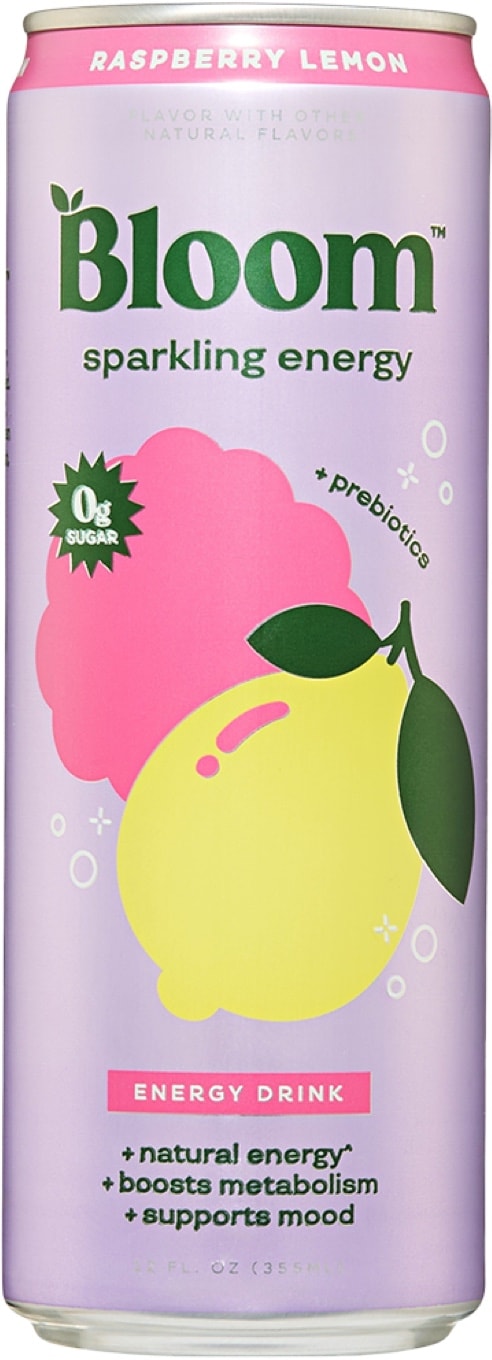
One energy drink contained exceptionally high levels of sucralose
A single can of Bloom “Sparkling Energy Raspberry Lemon” contained 144 mg of sucralose — 42 times above the level of concern identified in the NutriNet-Santé cohort24, and about three times above the dose associated with adverse effects on the gut microbiome and glucose metabolism in a human clinical study27.
These findings are particularly concerning given the widespread consumption of artificially sweetened beverages in the United States. In a large cohort study involving approximately 65,000 American women, nearly 13% of participants reported consuming at least one artificially sweetened beverage per day28.
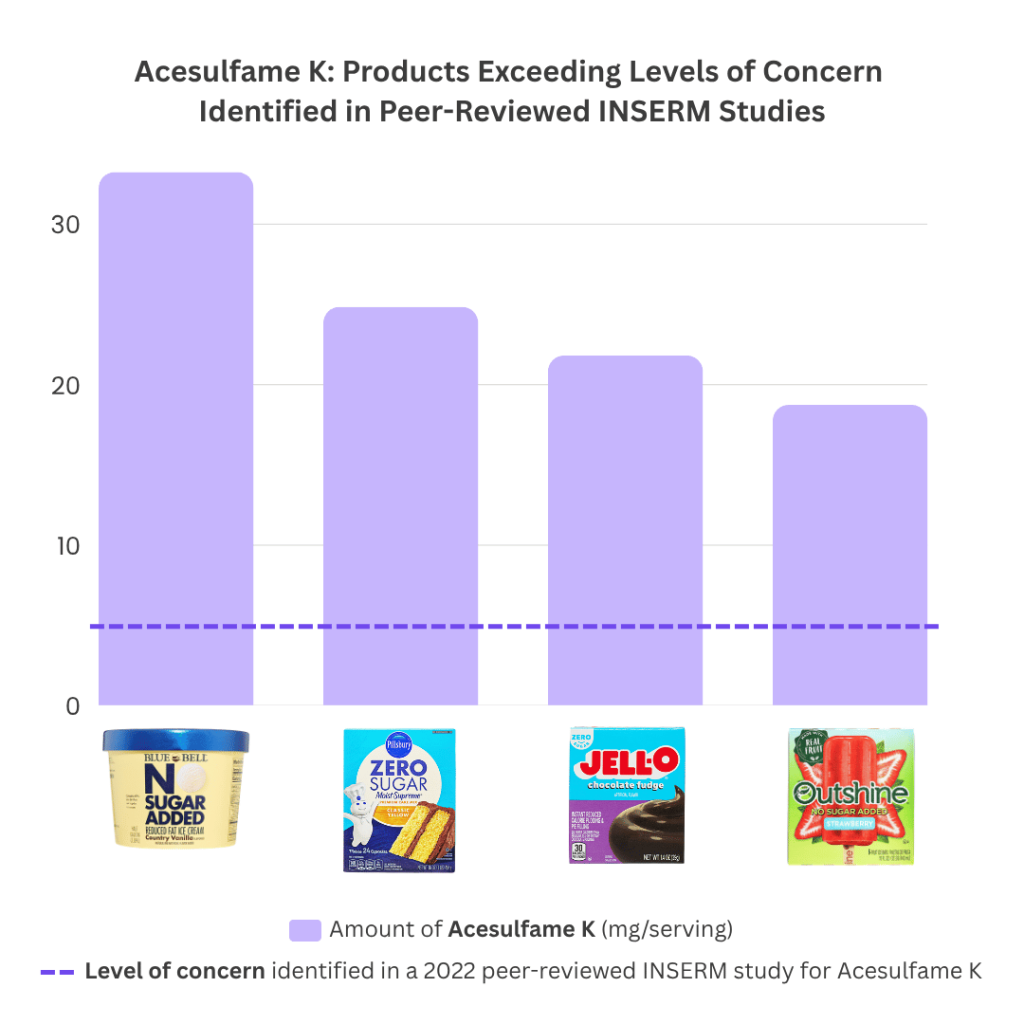
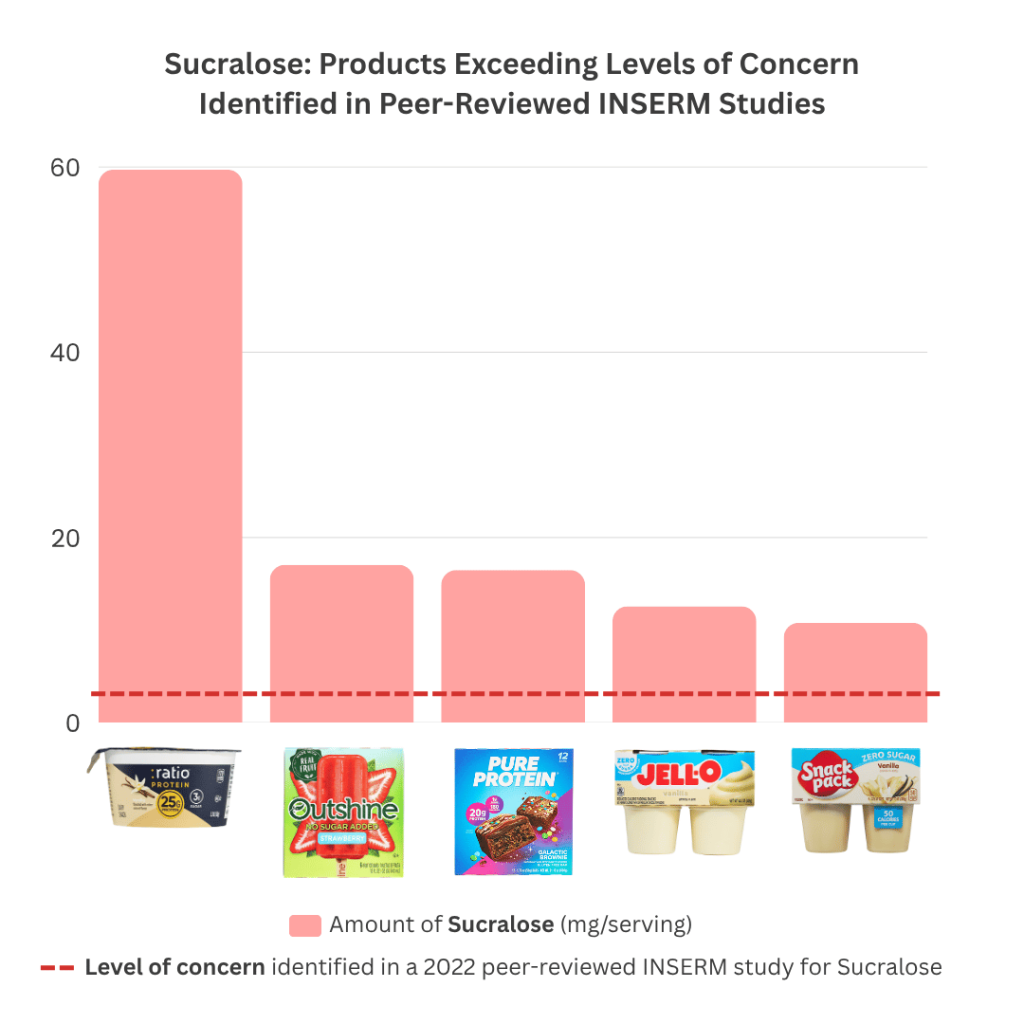
Among the “sugar-free” or “light” snacks marketed as alternatives to traditional sweet treats, sucralose and acesulfame-K were the most commonly used sweeteners.
Of the 11 products tested in this category, 10 exceeded levels of concern identified in peer-reviewed INSERM studies published in 2022 using data from the NutriNet-Santé cohort24-26.
One product stood out in particular: Ratio’s High Protein Dairy Snack Vanilla, whose packaging prominently promotes its high protein content. This product showed the greatest exceedance of the level of concern for sucralose. A single serving contained the equivalent of 52% of the FDA’s Acceptable Daily Intake (ADI) for children for sucralose. In practical terms, consuming just two servings in a single day would exceed the FDA’s daily safety threshold for this sweetener21.
This is especially concerning given that current Acceptable Daily Intakes (ADI) in the U.S. are largely based on older toxicological evaluations and may not fully reflect the latest scientific evidence regarding long-term metabolic and health effects.
At the same time, many consumers now incorporate these “high-protein” and “sugar-free” snacks into their daily diets, often perceiving them as healthier alternatives. These findings therefore underscore the need for greater transparency around the significant quantities of artificial sweeteners present in such products, as well as the fact that some exceed levels of concern identified in recent scientific studies.
What Yuka and CR’s Tests Revealed
The results of our investigation highlight a major issue with the use of additives in food products sold across the United States.
Among the 40 products we tested :
- one quarter contained additive levels in a single serving that exceeded daily safety levels identified by U.S. or European public health agencies
- nearly two thirds of the products tested (25 out of 40) contained at least one additive exceeding broader levels of concern identified in respected peer-reviewed studies.
The additives most frequently found at concerning levels were Red 40, titanium dioxide, sucralose, aspartame, and acesulfame potassium.
These findings are especially concerning given that the potential health risks associated with these additives are among the most extensively documented in the scientific literature.
- For Red 40, California’s Office of Environmental Health Hazard Assessment (OEHHA) reviewed more than 300 scientific studies — including human clinical trials, epidemiological studies, animal neurotoxicity studies, in vitro research and dietary exposure assessments — and said the Acceptable Daily Intake (ADI) would be up to 100 times lower than the current U.S. federal limit taking into account the most recent studies. California has also moved to ban Red 40 and several other synthetic food dyes from meals served in public schools starting in 202714.
- For artificial sweeteners, the World Health Organization reviewed 283 human studies before concluding in 2023 that these additives should not be used for weight control purposes7. That same year, the International Agency for Research on Cancer (IARC), the WHO’s cancer research agency, classified aspartame as “possibly carcinogenic to humans” (Group 2B)26.
- As for titanium dioxide, the European Union banned its use in food in 2022 following a reassessment conducted by the European Food Safety Authority (EFSA), based on the review of more than 12,000 scientific publications29.
Taken together, these results raise serious concerns given how frequently these products are consumed. Many are eaten daily by millions of children and adults across the United States. More importantly, several of these products can easily be consumed within the same day, leading to cumulative exposure to multiple additives of concern.
Contaminants linked to additives: concerning levels found in 6 out of 13 products tested
Beyond the additives themselves, certain contaminants generated during the production of food additives may also pose serious health concerns. Unlike additives, these substances are not intentionally added to food products. They can form unintentionally during industrial processing methods.
We therefore tested several products for the presence of glycidyl esters and 3-MCPD, contaminants that can notably be generated during the production of certain additives such as mono- and diglycerides of fatty acids. According to the European Food Safety Authority, both substances are considered particularly concerning due to their suspected carcinogenic properties30. Their potential health risks were deemed serious enough for the European Union to tighten regulations on maximum permitted levels in July 202331.
Our tests revealed that 6 of the 13 products tested contained glycidyl ester levels exceeding the daily safety levels identified by the OEHHA32. One product in particular — Hostess “Donettes Powdered Mini Donuts” — contained glycidyl ester levels reaching 18 times this limit.
These findings highlight that, beyond reducing the use of additives, stronger regulations are also needed to better control contaminants generated during food processing and establish more protective tolerance limits in everyday food products.
👉 View the full results of the Yuka and Consumer Reports investigation
Industry and FDA Responses
Before publication, Yuka and Consumer Reports contacted the manufacturers of all products highlighted in this investigation to share our findings and methodology and offer them an opportunity to respond. Only four responded to our multiple requests for comment, and McKee Foods, maker of the Little Debbie Oatmeal Creme Pies, declined to comment.
Several companies stated that the additive levels identified in their products comply with current FDA regulations and remain below the acceptable daily intake levels established by U.S. authorities.
Kraft Heinz, for example, stated that the levels of Red 40 identified in Kool-Aid and Jell-O Zero were “within approved limits” and emphasized that the company is in the process of removing synthetic dyes from parts of its portfolio.
Ocean Spray similarly noted that its products comply with current FDA regulations, while indicating plans to transition certain beverages to formulas using natural colors.
Amos stated that the amount of titanium dioxide identified in its gummies remains below the current FDA maximum allowable level and said the company has initiated a reformulation process to remove artificial color additives from the Peelerz product line.
The Consumer Brands Association, which represents the packaged food industry, said that “America has one of the safest and most highly regulated food systems in the world” and argued that the findings of this investigation could undermine public confidence in the food supply.
The Calorie Control Council, which represents the low- and reduced-calorie food and beverage industry, also responded on artificial sweeteners. “Observational studies can identify statistical associations but cannot establish causation,” said Carla Saunders, president of the Calorie Control Council.
The FDA declined to comment on the specific findings of this investigation but stated that it has launched a stronger post-market review process for chemicals and additives already on the market.
Our Recommendations
These findings underscore the shortcomings of the current regulatory framework governing food additives in the United States. In this context, it is essential that consumers have clear, transparent, and reliable access to information about the composition of the products they consume so they can make informed decisions about their health. More importantly, there is an urgent need for the FDA to significantly strengthen its approach to the evaluation, monitoring, and regulation of food additives.
Our recommendations for consumers
We recommend limiting, as much as possible, the consumption of products containing the additives identified as concerning in this study, particularly Red 40, titanium dioxide, and artificial sweeteners such as sucralose, acesulfame-K, and aspartame. In addition, we also measured the levels of BHA and BHT in several popular products. Although the amounts identified did not exceed levels considered concerning for a single serving, these additives should nonetheless be avoided given the numerous concerns raised in the scientific literature regarding their potential health effects33-35.
We also recommend limiting products containing mono- and diglycerides of fatty acids. These additives may contain toxic contaminants resulting from their manufacturing process, such as glycidyl esters. In our study, these contaminants were found at concerning levels in six of the seven products tested containing this additive.
We also recommend avoiding “diet” or “light” products unless specifically advised by a healthcare professional. These products often contain artificial sweeteners associated with numerous health concerns, and whose long-term effects on weight management appear unfavorable36.
More broadly, we encourage consumers to prioritize whole or minimally processed foods whenever possible. Products with long ingredient lists are often ultra-processed foods that are more likely to contain controversial additives (see our report on ultra-processed foods). Conversely, short and understandable ingredient lists are a simple and practical way to help reduce exposure to these substances.
Our recommendations for the Food and Drug Administration
1) Establish a clear and transparent risk assessment methodology
First, the FDA should establish and publish a clear and transparent methodology for assessing the risks of food additives, similar to the approach used by the EFSA in Europe37. Today, the absence of a detailed and accessible methodological framework limits understanding of the criteria used to determine the safety of these substances.
Greater transparency is also essential. The FDA should systematically publish the risk assessments conducted on all food additives in order to foster open, independent, and evidence-based scientific debate, while also ensuring that consumers and manufacturers have better access to information regarding the safety of these substances.
In addition, the methodology used to establish and revise Acceptable Daily Intakes (ADIs) should also be made fully transparent and publicly available. It should incorporate the full body of toxicological evidence through a rigorous weight-of-evidence approach, including human epidemiological studies. Such studies are particularly important for identifying health effects that may emerge over the long term at low levels of exposure, especially chronic diseases, which remain insufficiently considered in current risk assessment frameworks.
2) Regularly reassess the safety of food additives
The safety of food additives should also be regularly reassessed in light of scientific advances. Many recent studies highlight potential effects that were not taken into account during the initial evaluations, particularly regarding the gut microbiome, metabolism, and neurological development38-40.
Such reassessments must rely on robust quantitative risk assessment, incorporating both a comprehensive review of the scientific literature and a precise estimation of population exposure. Reviewing only a few isolated studies is not sufficient.
The report published in 2021 by the OEHHA on food colorings and neurobehavioral effects in children illustrates this limitation clearly14. The agency notes that the FDA evaluated these colorings, including Red 40, in the 1970s without ever conducting a comprehensive risk reassessment since then. Instead, the FDA reviewed only two clinical trials examining the behavioral effects of food colorings in children. In 2011, the agency acknowledged that some children may be sensitive to these substances, while concluding that the available data did not justify revising the Acceptable Daily Intake (ADI) for Red 40, established in 197141. However, according to the OEHHA, this conclusion is based on an overly limited analysis of the available evidence. The agency emphasizes that the FDA did not take into account the full body of recent animal toxicology studies or the mechanistic in vitro data accumulated over recent decades. Following a comprehensive risk reassessment, the OEHHA concluded that the “current ADIs may not provide adequate protection from neurobehavioral impacts in children.” In other words, the thresholds currently considered “safe” may in reality fail to adequately protect children.
Food additive safety reassessments should also be systematic and proactive rather than occurring only after years of public pressure. Today, citizen petitions are often the only mechanism available to request that the FDA reevaluate the safety of an additive. Yet this system is deeply inadequate: most petitions remain unanswered, and when the FDA does act, the process often takes decades.
This is precisely what happened with BHT. A petition requesting that the FDA reevaluate its potential carcinogenicity was submitted in 1977, yet the agency did not announce plans for a new safety review until May 2026, 49 years later42,43.
This approach is clearly insufficient. We call for systematic and timely reassessments of food additives already on the market, grounded in the latest scientific evidence and conducted within reasonable timeframes to ensure consumers are adequately protected.
In this regard, the European Union has implemented a systematic reassessment program for all additives authorized before 2009. Since then, 244 food additive evaluations have been updated to reflect the latest scientific evidence44.
3) Better regulate the use of additives according to product categories
There is a need for stronger oversight of how additives are used across different product categories. An additive used in decorative frosting consumed occasionally does not raise the same level of concern as the same additive found in breakfast cereals consumed daily by millions of children and adults, and which account for up to 10% of daily energy intake according to several studies analyzing Americans’ dietary habits in 2013-201445.
Beverages also represent another particularly sensitive category, as compounds consumed in liquid form are more readily absorbed by the body.
4) Better take into account the specific vulnerabilities of children
Risk assessments must also better account for the specific characteristics of children, including their dietary habits, lower body weight, and increased vulnerability to certain health effects.
This concern has already been raised in relation to Red 40 and neurobehavioral effects such as hyperactivity and attention disorders, but it may also apply more broadly to growth, cognitive development, and the balance of the gut microbiome.
5) Close the regulatory loophole created by GRAS status
The regulatory loophole associated with GRAS (“Generally Recognized as Safe”) status, which currently allows manufacturers to introduce new substances into food without any genuine independent assessment of health risks, must be closed.
The FDA should no longer permit the use of new food additives unless a comprehensive and independent quantitative risk assessment has been conducted by experts appointed by the agency. This assessment should establish levels of use that are protective of human health and ensure that no serious scientific uncertainty remains regarding potential risks to consumers.
👉 See Consumer Report’s investigation
Scientific analysis by Eric Boring, Sana Mujahid, James Rogers, PhD of Consumer Reports and Zoé Kerlo, toxicologist at Yuka.
Because the products were purchased over a two-month period beginning last November, the results may not mirror current levels in every product on shelves today. Even so, our findings highlight why consumers should carefully consider the role of these products in their diet.
It’s important to note that neither Consumer Reports nor Yuka is a compliance or regulatory body. We offer information for consumers to make informed decisions. No legal judgments can be made from our findings. For more information about how we tested, see our methodology.

- ¹ Yuka, 2025. Yuka Study: Additive Quantity in Food Products. https://yuka.io/en/yuka-study-additive-quantity-food-products/
- ² OEHHA, 2021. Report Links Synthetic Food Dyes with Hyperactivity and Other Neurobehavioral Effects in Some Children. https://oehha.ca.gov/risk-assessment/press-release/report-links-synthetic-food-dyes-hyperactivity-and-other-neurobehavioral-effects-children
- ³ CE, 2022. Food additives legislation. https://ec.europa.eu/newsroom/sante/items/732079/en
- ⁴ CE, 2026. Regulation (EC) No 1333/2008 on food additives. https://eur-lex.europa.eu/legal-content/EN/TXT/?uri=CELEX%3A02008R1333-20260218
- ⁵ Health Canada. Food additives. https://health-infobase.canada.ca/nutrition/food-additives/
- ⁶ Consumer Reports, 2024. Food Dyes Banned in School Foods in California. https://www.consumerreports.org/health/food-additives/food-dyes-banned-in-school-foods-in-california-a5379219541/
- ⁷ World Health Organization, 2023. WHO advises not to use non-sugar sweeteners for weight control in newly released guideline. https://www.who.int/news/item/15-05-2023-who-advises-not-to-use-non-sugar-sweeteners-for-weight-control-in-newly-released-guideline
- ⁸ Yuka, 2025. Yuka Study: Food Additive Usage Restrictions. https://yuka.io/en/yuka-study-food-additive-usage-restrictions/
- ⁹ FDA. History of GRAS List and SCOGS Reviews. https://www.fda.gov/food/gras-substances-scogs-database/history-gras-list-and-scogs-reviews
- ¹⁰ Lau K., McLean W.G., Williams D.P., Howard C.V., 2006. Synergistic interactions between commonly used food additives in a developmental neurotoxicity test. Toxicological Sciences, 90(1), 178–187. https://www.sciencedirect.com/science/article/pii/S0890623813003298?via%3Dihub
- ¹¹ Temkin A.M., et al., 2023. Nearly 99 percent of chemicals introduced into food in the U.S. since 2000 were not reviewed by the FDA. Environmental Health, 22, 78. https://link.springer.com/article/10.1186/s12940-023-01004-8
- ¹² EWG, 2022. EWG Analysis: Almost All New Food Chemicals Greenlighted by Industry, Not FDA. https://www.ewg.org/news-insights/news/2022/04/ewg-analysis-almost-all-new-food-chemicals-greenlighted-industry-not-fda
- ¹³ ISO. ISO/IEC 17025 — Testing and Calibration Laboratories. https://www.iso.org/ISO-IEC-17025-testing-and-calibration-laboratories.html
- ¹⁴ OEHHA, 2021. Health Effects Assessment: Potential Neurobehavioral Effects of Synthetic Food Dyes in Children. https://oehha.ca.gov/sites/default/files/media/downloads/risk-assessment/report/healthefftsassess041621.pdf
- ¹⁵ McCann D., Barrett A., Cooper A., et al., 2007. Food additives and hyperactive behaviour in 3-year-old and 8/9-year-old children in the community: a randomised, double-blinded, placebo-controlled trial. The Lancet, 370(9598), 1560–1567. https://pubmed.ncbi.nlm.nih.gov/17825405/
- ¹⁶ Neltner T.G., Alger H.M., Leonard J.E., Maffini M.V., 2013. Data Gaps in Toxicity Testing of Chemicals Allowed in Food in the United States. Reproductive Toxicology, 42, 85–94. https://www.sciencedirect.com/science/article/abs/pii/S0065128118300436?via%3Dihub
- ¹⁷ Neltner T.G., Kulkarni N.R., Alger H.M., et al., 2011. Navigating the U.S. Food Additive Regulatory Program. Journal of Food Science, 76(9), R139–R147. https://ift.onlinelibrary.wiley.com/doi/10.1111/j.1750-3841.2011.02267.x
- ¹⁸ Bateman B., Warner J.O., Hutchinson E., et al., 2004. The effects of a double blind, placebo controlled, artificial food colourings and benzoate preservative challenge on hyperactivity in a general population sample of preschool children. Archives of Disease in Childhood, 89(6), 506–511. https://pubmed.ncbi.nlm.nih.gov/20077213/
- ¹⁹ Stevens L.J., Burgess J.R., Stochelski M.A., Kuczek T., 2010. Amounts of artificial food colors in commonly consumed beverages and potential behavioral implications for consumption in children. Clinical Pediatrics, 49(7), 655–660. https://pubmed.ncbi.nlm.nih.gov/20551163/
- ²⁰ EFSA, 2021. Titanium dioxide: E171 no longer considered safe when used as a food additive. https://www.efsa.europa.eu/en/news/titanium-dioxide-e171-no-longer-considered-safe-when-used-food-additive
- ²¹ FDA. Aspartame and Other Sweeteners in Food. https://www.fda.gov/food/food-additives-petitions/aspartame-and-other-sweeteners-food
- ²² EFSA. Sweeteners. https://www.efsa.europa.eu/en/topics/topic/sweeteners
- ²³ Debras C., Chazelas E., Srour B., et al., 2022. Artificial sweeteners and cancer risk: Results from the NutriNet-Santé population-based cohort study. PLOS Medicine, 19(3), e1003950. https://journals.plos.org/plosmedicine/article?id=10.1371/journal.pmed.1003950
- ²⁴ Debras C., Chazelas E., Sellem L., et al., 2022. Artificial sweeteners and risk of cardiovascular diseases: results from the prospective NutriNet-Santé cohort. BMJ, 378, e071204. https://www.bmj.com/content/378/bmj-2022-071204.long
- ²⁵ Debras C., Deschasaux-Tanguy M., Chazelas E., et al., 2023. Artificial Sweeteners and Risk of Type 2 Diabetes in the Prospective NutriNet-Santé Cohort. Diabetes Care, 46(9), 1681–1690. https://pmc.ncbi.nlm.nih.gov/articles/PMC10465821/
- ²⁶ IARC, 2023. Aspartame. IARC Monographs on the Identification of Carcinogenic Hazards to Humans, Volume 134. https://publications.iarc.who.int/627
- ²⁷ D'Amico F., Peyrin-Biroulet L., Danese S., 2022. Artificial sweeteners and gut microbiota: a systematic review. Microorganisms, 10(2), 434. https://doi.org/10.3390/microorganisms10020434
- ²⁸ Sylvetsky A.C., Rother K.I., 2023. Trends in the consumption of low-calorie sweeteners. JAMA. https://jamanetwork.com/journals/jama/fullarticle/2807987
- ²⁹ BfR, 2020. Food Additive Titanium Dioxide (E 171) under Scrutiny. https://www.bfr.bund.de/cm/349/food-additive-titanium-dioxide-e-171-under-scrutiny.pdf
- ³⁰ EFSA, 2021. Process contaminants in vegetable oils and foods. https://www.efsa.europa.eu/en/press/news/process-contaminants-vegetable-oils-and-foods
- ³¹ CE, 2023. Commission Regulation (EU) 2023/1428. https://eur-lex.europa.eu/legal-content/EN/TXT/?uri=celex%3A32023R1428
- ³² OEHHA, 2010. Glycidol Notice of Intent to List. https://oehha.ca.gov/sites/default/files/media/GlycidolNSRL073010.pdf
- ³³ OEHHA. Butylated Hydroxyanisole. https://oehha.ca.gov/chemicals/butylated-hydroxyanisole
- ³⁴ Sasaki Y.F., Kawaguchi S., Kamaya A., et al., 2002. The comet assay with 8 mouse organs: results with 39 currently used food additives. Mutation Research, 519(1–2), 103–119. https://pubmed.ncbi.nlm.nih.gov/12160896/
- ³⁵ NTP, 1989. Toxicology and Carcinogenesis Studies of Butylated Hydroxyanisole (CAS No. 25013-16-5) in F344/N Rats and B6C3F1 Mice. https://ntp.niehs.nih.gov/sites/default/files/ntp/htdocs/lt_rpts/tr150.pdf
- ³⁶ WHO, 2023. WHO advises not to use non-sugar sweeteners for weight control in newly released guideline. https://www.who.int/news/item/15-05-2023-who-advises-not-to-use-non-sugar-sweeteners-for-weight-control-in-newly-released-guideline
- ³⁷ EFSA. EFSA guidance documents. https://www.efsa.europa.eu/en/methodology/guidance
- ³⁸ Suez J., Cohen Y., Valdés-Mas R., et al., 2022. Personalized microbiome-driven effects of non-nutritive sweeteners on human glucose tolerance. Cell, 185(18), 3307–3328.e19. https://www.cell.com/cell/fulltext/S0092-8674(22)00919-9
- ³⁹ Zhang Q., Chumanevich A.A., Nguyen I., et al., 2023. The synthetic food dye, Red 40, causes DNA damage, causes colonic inflammation, and impacts the microbiome in mice. Toxicology Reports, 11, 221–232. https://doi.org/10.1016/j.toxrep.2023.08.006
- ⁴⁰ Miller M.D., Steinmaus C., Golub M.S., et al., 2022. Potential impacts of synthetic food dyes on activity and attention in children: a review of the human and animal evidence. Environmental Health, 21, 45. https://doi.org/10.1186/s12940-022-00849-9
- ⁴¹ FDA, 2019. Color Additives and Behavioral Effects in Children. https://www.fda.gov/media/131378/download
- ⁴² The Washington Post, 1977. A Citizens Group Call for BHT Ban. https://www.washingtonpost.com/archive/lifestyle/1977/07/27/a-citizens-group-call-for-bht-ban/9f59fe10-3d06-4267-9fc8-6d59481386c4/
- ⁴³ FDA, 2026. FDA Finalizes Food Chemical Safety Post-Market Assessment Program, Launches Reassessment of BHT, ADA. https://www.fda.gov/news-events/press-announcements/fda-finalizes-food-chemical-safety-post-market-assessment-program-launches-reassessment-bht-ada
- ⁴⁴ European Commission. Re-evaluation of food additives. https://food.ec.europa.eu/food-safety/food-improvement-agents/additives/re-evaluation_en
- ⁴⁵ The FASEB Journal, 2017. Abstract 648.18. https://faseb.onlinelibrary.wiley.com/doi/abs/10.1096/fasebj.31.1_supplement.648.18


Thank you for sharing, they need more regulations on the food that they put in the market.\n It’s not the app. The app is more informing or making better choices, and I thank you very much. That’s okay because nobody else has any honor reader.But that’s what makes life so hard for people
God please bless Yuka and its creators and staff with much success. Amen
Thank You for all you do . I take you into the markets with me all the time. I know now what to buy and what to stay away from.
Thank you for informing community of options for heathy ingredients. I’m hoping for more information about protein.
I think many of us in the USA are very lucky to have Robert F Kennedy Jr in the leadership of the FDA and has already begun the task of removing or requiring of the testing of additives that have been long overdue. The only problem is what the next administration will do to address this? We all need to demand the continuation of this process and remove most of these unnecessary artificial additives.
How can I make a donation other than the annual membership fee?
Thank you so much for the information, Yuka you’re doing a great job.
Still trying to find a decent bread. Thanks to Yuka I know what not to buy and consume.
I have really enjoyed using this app! No wonder people have cancer, diabetes, blood problems, short lifespan heart disease etc. etc. radiation is also a factor with our stupid iPhones and androids! People better wake up are they will wake up somewhere where they might not want to be!
Team Yuka, you’re doing a world of good for humanity. It takes a village to take down those manufacturers who don’t care about human lives, but how much more money theh can make by cutting corners and jeopardizing the health of others. I bet you they dont feed their families with the same foods they’re feeding us. So sad. I grew up in the Caribbean eating foods that came straight from the ground. Living in the U.S. is very challenging because its so costly to eat a wide variety of organic foods. Thank you for your dedication to better food and better health 🙏🏾 😊
Thank you for your hard work!!!
Thank you, Yuka! Your app has been a wonderful tool for me. I have a rare sickness. The app has help me to eat more healthier and safe me a lot of my time.
Great insights on making smarter product choices—quality and design matter too, just like the Adidas SPZL Feniscowles Jacket for those who appreciate premium apparel.
Thank you, Yuka! A very informative research article and something I’ve been telling my children for over 20 years – stay away from food additives and preservatives whenever possible (particularly when you cannot pronounce their names!) and stay away from diet sodas and artificially sweetened food/beverage items.
And, even though its a different topic – plastics needs more study. Plastic molecules are in all of us. Its not a good thing! The food lobbies’ and plastics lobbies’ have, unfortunately, had their negative influences in these industries.
I wonder when there will be a definitive study that links food preservatives, artificial sweeteners and plastics to the incredible rise in cancer cases over the past thirty to fifty years…?? I can’t help but think that that they are a contributing factor…
Thank you so much for your research, and advocacy for the health of Americans,
Your app and blog are a game changer for my family. We just didn’t have time to review every ingredient label. Now we’re empowered to avoid snacks with red, orange or yellow flagged additives. My oldest daughter (6) loves granola bars. A simple product switch meant little to her daily routine, but could have HUGE value in protecting her gut and overall health. She now asks “does this have bad additives?” at the grocery store and we check the app together! Thank you so much!
What a fantastic study; much needed information. Thank you! We eat simply and read all labels – but will be even more vigilant having read this!
Most people who have pre diabetes , type one or two diabetes don’t realize how harmful sugar substitutes are. Also just a note on the titanium dioxide. I stopped taking a medication in which the pills were made with this toxic substance.
So grateful for your dedication to making our food safer! I love your app and use it daily. My food choices have changed for the better. Thank you for making it easy for me to scan before I purchase. My dollars only go to the best for me and my family products now! I have shared your app with many friends and family members & they use it now also. God Bless you and yours ❤️
Same here! May God keep blessing you and so many others for being open and responsive to change, helping everyone you love❣️
*May our Heavenly Father God greatly bless Yuka for their wonderful App and health knowledge.
Yuka is a total life saver for me. I’m shocked sometimes with items that are also organic that have ingredients with risks. I always check everything . Thank your research. I believe the pharmaceutical companies are all a part of this . They want us to get sick . The only way this can change is if people stop buying the products. Some people don’t care because they are addicted to these products and the manufactures know this . They don’t care about people’s health . They want want to stay millionaires . I try my best to share the Yuka app with people and educate my family but some people dont care I guess.
Thank you for this information. I use Yuka app all the time and when people ask me what I’m using in grocery stores it gives me an opportunity to tell them about Yuka. Thank you for doing what you are doing for a healthier life! Blessings!
Watch the MAHA movie, where this stuff and much much more is talked about. It’s the best, most informative movie I’ve ever watched!!!
Thank you for helping me make better food/beverage and body care choices. I’m hoping it’s not too late! I regularly use the app.
Keep up the good work. It took a long time for the US to have any regulations for food. It took brave people to write books and articles . Eventually “we the people” will see the light !
Dear Food Scientists: Quit poisoning us. Who’s going to be left to buy your products?
Amen⁉️😅
Please do better
Thank you Yuka for availing this awesome website to the public. I use the website quite often as I shop so much so that management and security probably wonder why I scan so many products! Dah!!! And as another individual commented on the inclusion of “this product might contain bioengineered ingredients/products”, in fine print, I too began noticing this well over a year ago. I prefer not to purchase such products. Keep up the great work!
Your researchers are rock stars! Not only are they analyzing all the data, but are presenting it in an easy to understand format for us mortals. Thank you for all your efforts!
This country disgusts me. Im ashamed of what we have become.
We need to change these ingredients. There is no excuse for this.
I appreciate this for this info. It’s very helpful.
While I no longer use the app or pay for it due to many discrepancies, I appreciate the effort to educate people about the importance of what goes into their bodies!
An amazing, enlightening and frightening article. This madness has to stop! Thank you for all you do to bring this issues to the forefront. Thank you for caring!
This was a fabulous article reflecting a lot of research and work. The information is so important. Thanks for sharing!!
That research is very helpful and enlightening
I really appreciate your hard work in the food safety research and your contribution to the healthy lifestyle of USA. It’s very important to be aware of the dangers of food additives and what effect they have on our bodies.
Thank you so much!
Thank you for your service and help. It a great help to us and kids.
While I no longer use the app or pay for it due to many discrepancies, I appreciate the effort to educate people about the importance of what goes into their bodies!
Sorry, that didn’t post in the right place.
Thank you for caring! We appreciate the help in navigating our confusing labels especially around additives. Food “pretty” should happen in the home with real ingredients! Mother nature makes it happen daily! Just look at the colors fruit or veggies add to our plates!
great information thank you!!! I use my app all the time, lots of items get put back
SAME!
I have stopped purchasing many items due to having the YUKA app on hand. I’ve been better educated about many food items that I was absolutely not aware of! Thank you, YUKA!
Thank you for all you do. I use your app all the time and I recommend it to everyone I know. We need to stop all the artificial foods and all the harmful additives that go into them, so we can all be healthier.
Keep up the great work that you do.
I would love it if you could advocate for mandatory labeling for potentially “dangerous” additives. Beyond the good work you are doing, what I mean is where the dangers are intentionally hidden, like when aspartame is added to packaged “wasabi” and liquors, but no package warnings for PKU sufferers. Personally, I’d also like to see label warnings for things like dark beers that contain unlabeled lactose. Liquor makers aren’t required to list ingredients, which is fine for trade secrets, but at least put warnings for things like aspartame and lactose! I’ve had a very uncomfortable and embarrassing surprises after consuming such beers. (Now I always take lactase pills before beers, just in case.)
It’s amazing that the USA lets the manufacturers regulate them.
Thanks for all you do
We need to eat healthier to live longer
Stop the artificial foods and dyes
I love this app
THANK YOU!!!!!
I just forward this on to many of my friends. I know they too will forward it on to their friends. The power is in the money. The consumer has what the food makers want, OUR MONEY. You are giving us the scientific data and research so we can make informed choices based off of that info. With that, we can choose how to use our money. We WILL make them do something about it!!!!
Also, it makes me so happy when I see others in the store scanning bar codes. With that instant info provided, we then are able to make the decision: keep, pass or go find an alternate. POWER TO THE CONSUMER!!!!
Thank you Yuka for what you are doing now!
Thank you for all the information you provide & watching out for us the end user. Takes outside sources heaven knows our government cannot watch out for the voter
Thank you for all the information you provide & watching out for us the end user. Takes outside sources heaven knows our government cannot watch out for the voter
The FDA has to be paid off to allow these poisons in our food. You are so appreciated.
Thank you for your deep dive into additives. Is Yuka also looking into the “bio- engineered ingredient” that started to show up on many food items especially snacks and cereals? It seems like they just replaced GMO with bio-engineered ingredient. Most people probably don’t know it’s on the label.
And please, please, please don’t think for a second that RFK Jr. gives two hoots about your or my health. He’s a troubled man with no expertise. While I agree with him on some things…like we have to get dyes and unhealthy additives out of our foods…. He’s certainly not the first person to be advocating for this. Don’t be fooled by his title. He’s far from a health or human serve expert.
Thank h you for reinforcing the fact that laboratory created food additives (aka artificial sweeteners and gmos) were never meant to be ingested by humans. A teaspoon of sugar is only 16 calories. You can burn that by taking the stairs at work. The challenge is for our diabetic friends. There must be a way to devise a sweetener that doesn’t cause cancer or other health issues.
Stevia
Great information, thank you!
Thank you Yuka! This information is too important to ignore. I think the majority of Americans would be flabbergasted to know the ingredients in their children’s favorite snacks. They seem to be slowly poisoning us all, its quite alarming. We appreciate this very vital work you are doing for the public. Thank you.
Safety first over the almighty dollar. Thanks Yuka!
I usually don’t participate when I have to give my email address, because you get an overload of undesired emails after you do, but this is too important to ignore, and not sign the petition. I am concerned for children and what they are consuming in the products. Even though I share the app with my friends and family, not all of them take it seriously enough, and with sports involvement, and parties the kids attend, snacks seem to matter more. When I shop, I share the app with anyone that is interested, and that has been quite a few. Shopping for personal items, and expressing my desire to search for those without harmful ingredients, using the app, to my surprise, one lady knew it was Yuka, so word is getting out. I pray with the help of Secretary Kennedy, and his passion to correct the wrongs of the many past years of abuse to the consumers, we will see some real change that will benefit our health, and especially the health of children. It is sad and appalling what they have been subjected to. Thank you, Yuka, for bringing light to a very important matter.
Very happy for the fact that someone is actually minding the store. It is actually criminal and inhumane for these companies including the FDA to slowly poison us. They are morally incompetent. Keep up the good work. Lou
Thank you for this valuable information!! I will definitely share with my contacts and family members!!!! God bless you always 🙏🙌👍👍👍
I will forward this excellent article to my family and friends. Thank you! God’s blessings be with you!
That’s a super informative article. I use your app, and my lab results have gotten way better. May God bless you and help you keep up this really important work.
May the Holy Spirit convict the manufacturing companies to consider lives than money.
Great article! I tell everyone about your app! My doctor saw all my lab results improve this past year…and I feel so much better! Thank you, Yuka!
Valuable article. Love your app! I use it constantly for food and beauty products/cream/serums. I tell people about it all the time.
Excellent article. Love your app too. Thank you
U always come shopping with me! Thank you
Excellent article. Thank you. Will be sharing. Love the app.
great insight!
It is very apparent that the FDA like so many of the other government agencies in our country do not really care about the health and safety of its citizens. It is all about the money.
TRUE!
Love your site, your information, and everything you do. We try to avoid processed food for several years now and wish that there was more information along with warnings on high fructose additives & warning indicators for the alternate names used for corn/maize products that are added; for those that have serious allergies to corn products.
Thank you I am much more aware since using Yuka. I learned of Yuka from a health class on eating at our local YMCA. I am grateful for this information.
Thank you so much for this research and providing American families with wisdom on foods to avoid. I eat organically and avoid these but my grandchildren need to be aware. You are such a blessing…so very grateful fir your wisdom. I love using your app.
Please stop doing business on people’s health with your ultra-processed food, chemicals, artificial colors, sugar, and lab food.
Thanks a ton . Great app!!!!!!!
Although thankfully we are not using any of the products highlighted in the investigation and always use Yuka before trying a new product, I am pretty amazed to realize the magnitude of poisoning inflicted on the public in the US, by the food industry.
It’s quite staggering and frightening.
Thank you for helping bring attention to this important issue! It’s deeply concerning that many food products contain ingredients that a growing number of experts and consumers believe may contribute to long-term health problems, often while prioritizing profitability over public well-being.
I’ve made a conscious effort to minimize processed foods in my diet, and the difference in how I feel has been remarkable. Unfortunately, many people are not fully aware of the potential health impacts of highly processed foods, and for many families, access to healthier, less processed options can be limited by cost and availability.
Greater transparency, consumer education, and access to affordable, nutritious food would go a long way toward helping people make informed choices about what they feed themselves and their families
I scan everything and people wait and ask what I’m doing and show them this app, I’m so very thankful for it and all the work you have put into it! I’m also thankful we can donate once a year, I learned to read labels and get my food in order after going through cancer and doing it all natural and never went the doctors routine, I never once had low energy, never once lost my hair and never once not showed up to work or an appointment! But this app has brought more attention to so much more ! So thank you isn’t enough! Keep up the amazing and life saving work 🙏♥️ cancer free for over 34 years 🙏🙏
Thank you for the work you do to get the information out there to us, hopefully we all will pass this on to friends and families
It’s very sad our food supply is all about money over health. Food manufacturing companies pay a lot of money for flavor profile and ingredients to trigger our dopamine to keep us addicted to their products so we will keep buying them. Then there is the shelf life issue. Many resturaunts and cafeterias use these products as well, it’s not just a grocery store problem. We really need to go back to making our own food from fresh local whole ingredients. And ‘farmers markets’ need to be about food again. Food from local growers/ ranchers, fresh baked goods, etc. I feel the US has let these practices go on for far too long and now we have a whole economy built on it. When they ditch one bad ingredient, companies seem to just find another bad one to replace it with. We really need tighter restrictions of approved ingredients they can use. And approved meaning it is actually good for us, not minimal amounts of bad stuff that’s allowed. So many ‘healthy’ packaged foods have palm oil in it, its crazy. Its rare to read a label and not see at least one bad thing on there. Your app is definitely helpful, thanks for the work you all put in it!
I was told: the healthy shopping method: is to only shop the outer ends of the store and limit what you buy in the middle .
Basically one needs to make their own food to control what’s in it !!! We do.
Thank you for this. Great work!
The petition link isn’t working (at least for me).
Thank you for the health conscience information. I like it and hope you will keep it coming!
My Yaka friends, thank you so much for sharing all this great and good information for me and to share with others. So appreciate it matched thankfulness and blessings.To all of you.
Thank you for taking the time to do the research and share these findings! In the past consumers’ primary concerns were fat and sugar; now we are finding how unsafe our food is by way of additives. From a non-scientific customer of Yuka, your work is so appreciated!
We need more warning labels on foods with added chemicals so parents can make wise choices!
I absolutely love the Yuka app and am so thankful for your ongoing support and investigation into our food. I had no idea we were consuming so many harmful ingredients until I started using it. Thank you for all you’re doing, for raising these concerns, and for providing the transparency about what is in these products that we so desperately need. I truly hope we can make food in America healthy again!
We need more information as you have posted this is a great service. There are far too many foods out there that should be addressed. Thank you-Tom
Grateful to platform like Yuka for throwing light on these hidden dangers that have plagued our society from the very entities that are supposed to provide safe solutions to our nutritional and consumptional needs. We can’t stop these corporations or hold them accountable due to the power and influence they wield , but thank you for helping us make right choices to preserve our health and wellbeing. Let’s put our money where our mouth is and get a paid version. Hopefully the app expands to products for hair, skin and others etc soon
We do not need to add harmful additives into food, the environment does enough damage to our health. We definatly need stronger laws! Thank you for keeping us informed. The information is priceless. We as consumers should read labels!!!!! Being in the field of nutrition ,which is always changing, Nothing is more important then what we fuel our body with, and what we use on our body. We only have one!
Farmers are being priced out of farming and farmland is being developed. Fake meat and bugs are replacing real meat protein. Our produce is GMO’d to death and sprayed with pesticides. Our water sources get polluted by industry. And the “food industry” produces food that kills us and is addictive (eat it and you want more of it!). Change needs to happen! The foods produced by the food industry MUST be safe for human consumption.
I really think it’s all part of the globalist plan to lower population.
Eat the poison, see a doc and get drugged. Drugs effect overall heath, take more drugs.
I don’t touch any of this stuff but I do work for a distributor and what I see sickens me.
I’ve come to the conclusion, that our grocery stores can kill us. There is so much that we don’t know about our food. It is frightening. I tell people about your app all the time. THANK YOU !!
THANK YOU!
Thank you so much for organizing this.
My question is why FDA wouldn’t initiate this on their own..? I am sure they are aware of the harms and all the cases of very early cancer that are happening in young folks.. They are the gatekeepers..?
THANK YOU!!
really happy I don’t eat/drink any of these items except in the rarest of circumstances
Since 1970 I have been reading labels, having learned that the ingredients are listed according to amounts. But it began opening my eyes to exactly what is in a product and I began excluding many products that had ingredients I couldn’t pronounce or find any information that told me what it was. I cannot stress enough the importance in reading ingredient labels and if you can’t pronounce the words or have no idea what it is, then do not buy that product. The power of consumers is to not buy the product and hopefully force a change in what goes into our foods. And even better is to buy locally produced foods.
I thought Yuka we keep me from reading labels but I loose the cell signal in the stores lol.
Thank you for collaborating with Consumer Reports to investigate, bring this to our attention and provide a means to be heard!
Thank you for speaking out for us.
Thank you for our futures. Our heirs will benefit greatly. GO GET’EM
Any way to tell products with Apeel? Or any foods coming from farms or growers connected to Bill Gates?
Thank goodness for two things 1) I would put none of these things in my mouth
2) I neither live or visit USA
I am glad you included that your recommendation whole or minimally processed foods. I really isn’t that hard to make your own meals from wholesome ingredients.
I am concerned about the use of carrageenan in so many products from Costco roasted chicken to ice cream and salad dressings. It is very irritating to the digestive system.
I find it ironic that the Consumer Brands Association would argue the findings of this study could undermine public confidence in the food supply. Actually the uncontrolled use of these bad additives in the food supply is what undermines confidence. Don’t shoot the messenger…
If you found this study interesting (or scary) you should consider reading the book “Salt Sugar Fat: How the Food Giants Hooked Us” (2013 by Michael Moss).
The Bad News: That is some scary stuff, and obviously, our federal government is asleep at the wheel through many administrations from both parties.
The Good News: We consume nothing included in the study, except cranberry juice (the as real as you can buy these days type….:-)), and we will look into that.
GREAT paper!! Thanks for the transparency on the study details…. Stats Geek here….
Thank You for Sharing!
This is very detailed and scary. Our grandchildren eat more junk and parents don’t monitor and teach them how to eat. They live off of junk food. One day their eyes will open to the harm this can and probably will do to their bodies. Thank you for this vital information,
Thank you so much for everything you do for us. I feel more confident while shopping using Yuka.
Please continue the outstanding work that you are doing. You have proven to educate all consumers, through all of your research, that too many products that we have been consuming are offered as trusted brands that blatantly include harmful substances that should be illegal to sell to the public!
I don’t purchase without you! Thanks so much!!
Thanks for your continued work on this. Change is needed.
I don’t go shopping without you. Thank you so much!
I’m in
Why are these additives good for America but not for European Countries ?
Thanks for fighting the good fight!
I don’t leave home without my Yuka app. I can everything it allows.
I’m a member of Consumer Reports and the YUKA app is one of only maybe 3 apps I have chosen to pay for.
Support the good work they do if you can.
Very informative report! Thank you for sharing.
If people were smart and boycotted these processed foods the companies would have to stop making them. Put your money where your mouth is and make a difference.
Wow! Just Wow! Thank you for all your research and findings
Amazing and important work. Thank you for sharing this.
Thank you so much!!! Please keep sharing theses bad food items. I love this app.
Is there a safe sugar free substitute to use? Monk Fruit for instance? Or any othere?
I’m so glad you are partnering with Consumer Reports on this, and hope you both will continue the good work they started so many years ago. Thrilled to see what I consider to be the younger generation picking up the baton.
Thanks for all you do. While in Costco the Costco Buffet ladies were all talking about your app. It must be doing something right.
I wonder why would people even consider buying any of those…? I suppose it is cultural. Where I come from, we eat real food.
I clearly remember my mother, I am English, comparing the ingredients of a store-bought Apple pie with one she made. I was scary in the 1980s in England, let alone in 2026 America! I have lived in the US for 35 years and have tried to eat healthy food. Whether Aspartame or any other ingredient is 100% bad or 1% bad, it is best to try to avoid them. I thoroughly endorse what Julie and Yuka are doing and have recommended the app to tens if not hundreds of people, many of whom were asking me what I was doing whilst shopping.
Thank you, Julie, and team for your vision.
It seems that you are not providing the total picture in regards to aspartame for one – the full statement from WHO site states: IARC classified aspartame as possibly carcinogenic to humans (Group 2B) on the basis of limited evidence for cancer in humans (specifically, for hepatocellular carcinoma, which is a type of liver cancer). There was also limited evidence for cancer in experimental animals and limited evidence related to the possible mechanisms for causing cancer.
JECFA concluded that the data evaluated indicated no sufficient reason to change the previously established acceptable daily intake (ADI) of 0–40 mg/kg body weight for aspartame. The committee therefore reaffirmed that it is safe for a person to consume within this limit per day. For example, with a can of diet soft drink containing 200 or 300 mg of aspartame, an adult weighing 70kg would need to consume more than 9–14 cans per day to exceed the acceptable daily intake, assuming no other intake from other food sources.
Still obviously smart to avoid consumption as much as possible but maybe not as alarming as your article implies.
Thank you to Jan for doing the deep dive on this. A far better explanation, and perspective on this issue. A fine example of why it is imperative to do one’s own research. Appreciated.
Hi Jan, as a physician, I do appreciate full disclosure. And while powering of studies, specifically a randomized control trial would likely be considered unethical when you’re looking at a chemical that could potentially harm a human. As such we’re left with Meta analysis. The take-home that I tell all patients is if it likely is not good for you why chance it. Chose the alternative or forgo the good substance. Again, others have noted above, the only way to create change within this industry is by changing our buying patterns. I’m not going to put my children or family in potential harm nor would I be able to recommend this substance to a patient in good conscience.
Your articles are so informative. Thanks for all you do!