


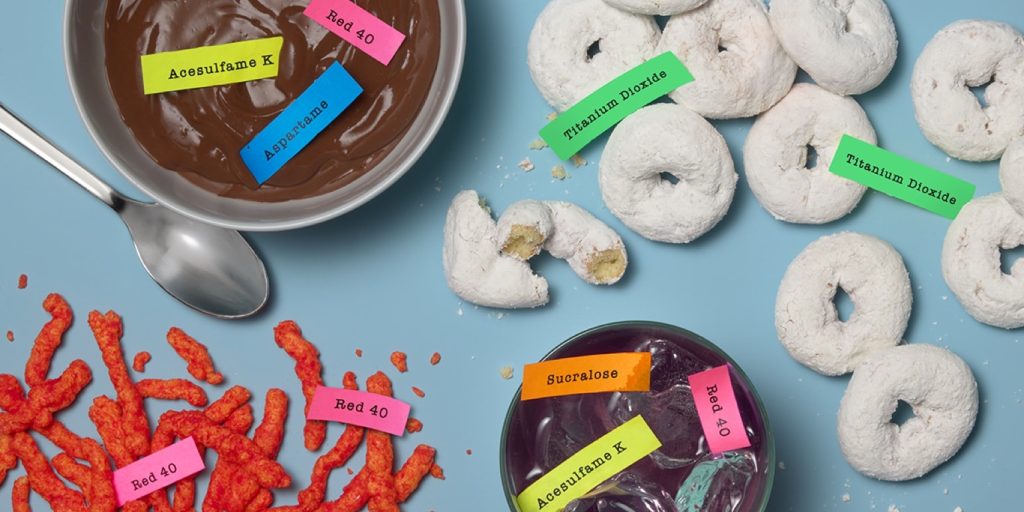
Photo: Scott Meadows / Consumer Reports
Yuka partnered with Consumer Reports to produce this investigation. Consumer Reports is an independent, nonprofit, ad-free member organization that works side by side with consumers for truth, transparency, and fairness in the marketplace. Together, the organizations decided on the products and substances to test and then compared the amounts detected against daily safety levels established by U.S. and European public health agencies, including the FDA, the European Food Safety Authority, and California’s Office of Environmental Health Hazard Assessment, and levels of concern identified in peer-reviewed scientific studies. Then, a team of scientists analyzed the resulting data to calculate a “hazard quotient,” or the level below which no adverse health effects would be expected to occur, for each of the substances, taking into account a lifetime of chronic exposure. CR contributed its scientific and investigative expertise and experience working on food safety regulatory issues. The organization also contributed graphics and design to the effort.
From breakfast cereals and sodas to snacks and desserts, food additives have become ubiquitous in the American food supply. These substances are commonly used to enhance taste, texture, shelf life, or appearance, but a growing body of scientific research has raised concerns about the potential health effects of some widely used additives.
Yet many of these substances remain prevalent in the United States, despite being banned or more strictly regulated in Europe and other parts of the world.
Against this backdrop, Yuka and Consumer Reports conducted an investigation into the levels of several controversial additives found in everyday food products sold across the United States. We analyzed 40 popular products consumed by millions of Americans, including many children.
The findings are alarming: one quarter of the products tested contained additive levels in a single serving that exceeded daily safety levels identified by U.S. or European public health agencies. When considering broader scientific evidence, nearly two thirds of the 40 products tested (25 products) contained at least one additive exceeding levels of concern identified in respected peer-reviewed studies.
Discover the full results of our investigation and learn which products raised the greatest health concerns.
Why Additives Are a Growing Health Concern
Food additives are everywhere on supermarket shelves, especially in the United States. According to a Yuka analysis of more than one million food products across eight countries, American products contain an average of 3.14 additives per product; twice as many as products sold in Italy, 68% more than in France, and 24% more than in Canada1.
These substances, generally of synthetic origin, are added by manufacturers to serve a variety of technological purposes: enhancing flavor, modifying texture, extending shelf life, or improving visual appeal. Preservatives, colorings, sweeteners, and texture agents are therefore widely used in processed foods consumed daily by millions of Americans. However, a growing body of scientific research has associated some of these additives with potential health risks.
One major issue is that U.S. regulations often rely on safety evaluations conducted decades ago, with little meaningful reassessment in light of new scientific evidence. Since then, research methods have evolved considerably, and recent studies have identified toxic effects that were undetectable during the original evaluations2.
In response to these concerns, several health authorities around the world have taken stronger regulatory action. The European Union has banned titanium dioxide in food since 2022 and requires warning labels on products containing certain artificial colorings3,4. Canada regularly updates the maximum permitted limits for several additives in order to better protect consumers5. In California, an official report published in 2021 led to the upcoming ban of Red 40 in public schools6. In 2023, the World Health Organization also advised against using artificial sweeteners for weight loss due to the lack of demonstrated long-term benefits7. No comparable federal measures, however, have been adopted in the United States.
As a result, the U.S. imposes far fewer restrictions than Europe on substances whose risks are nonetheless documented. Among the 50 most commonly used additives identified by Yuka as presenting some level of concern, 38% are not subject to any enforceable limit on the quantity permitted in food products in the United States, compared with just 14% in the European Union8.
Finally, many new additives are now introduced through a regulatory loophole called “GRAS” (“generally recognized as safe”). This system allows manufacturers to use certain substances without prior independent evaluation by the FDA, and in some cases, without even notifying the agency. According to an investigation by the Environmental Working Group, nearly 99% of the new substances added to food since the 2000s were introduced through this mechanism9-12.
In the absence of strong and consistent federal regulations on food additives, our two organizations conducted laboratory analyses to measure additive concentrations in food products that are especially popular among American consumers. The results were then compared against the most protective health-based thresholds currently used by public health authorities around the world, as well as with broader levels of concern identified in respected peer-reviewed scientific studies.
How We Conducted Our Tests
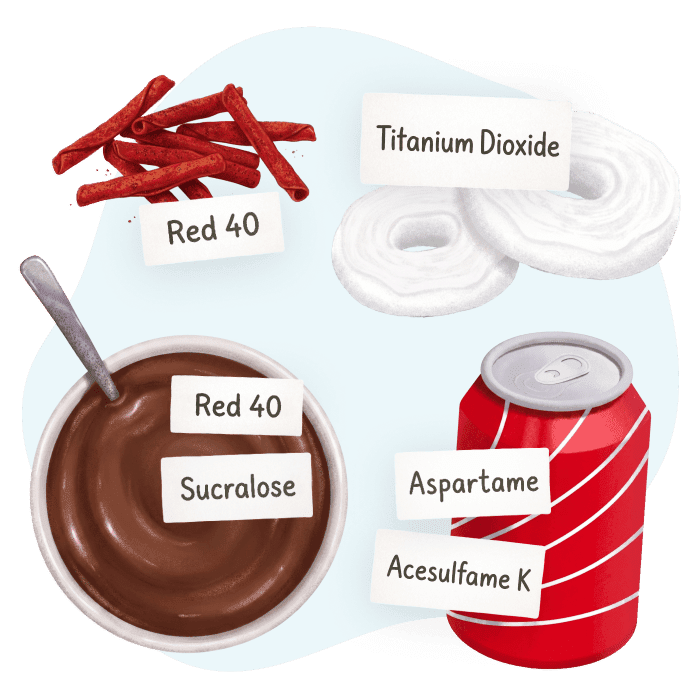
We first identified the eight additives presenting the highest levels of health concern based on the available scientific evidence. This selection was based both on the strength of the evidence regarding their health effects and on data indicating that part of the population may be exposed to them at concerning levels. The additives selected were acesulfame-K, aspartame, BHA, BHT, Red 40, sodium nitrite, sucralose, and titanium dioxide.
We then selected 40 very popular food products in the United States using scan data collected through the Yuka app. The products tested spanned several major categories, including pastries and sweet baked goods, ice cream and frozen desserts, confectionery, snacks, gelatins and puddings, processed meats, chips and potato-based products, and yogurts. The beverages analyzed included sodas, sports drinks, flavored drinks, energy drinks, and fruit juices.
Samples of each of these products were then analyzed by an ISO 17025-accredited laboratory, the international reference standard ensuring the reliability of analytical methods and the quality of implemented procedures13.
Finally, the measured concentrations were compared with daily safety thresholds identified by U.S. or European public health agencies for both adults and children, as well as with levels of concern identified in respected peer-reviewed studies.
👉 See the full methodology details
Red 40 : concerning levels for children found in 5 products
Among the 13 products analyzed, five contained enough Red 40 to exceed, in a single serving, the daily safety level for children identified by the California Office of Environmental Health Hazard Assessment (OEHHA)14. Even more concerning, three of these products contained levels high enough to also exceed the daily safety level identified for adults.
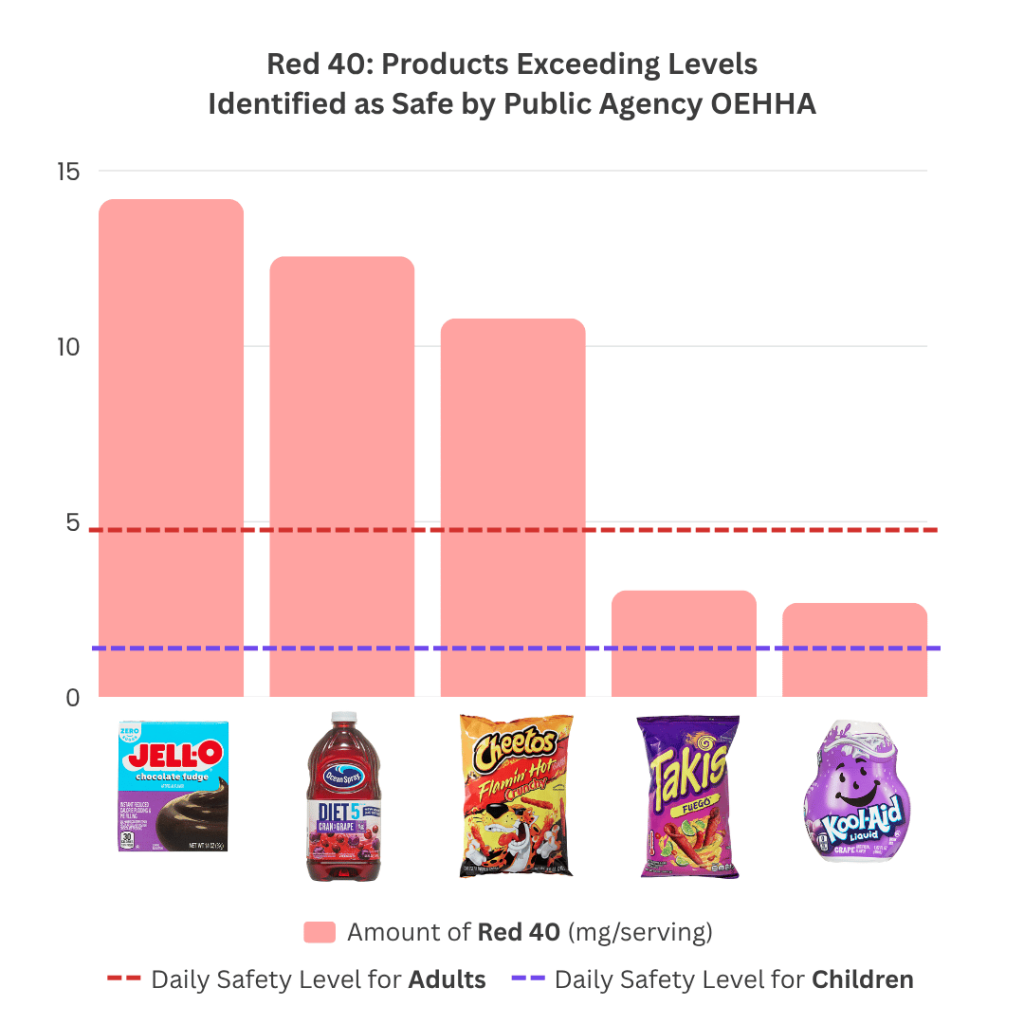
We calculated separate risk levels for children and adults based on average body weights. The daily safety level is lower for children because of their lower body weight: for the same amount consumed, their exposure is proportionally much higher than that of an adult, who may weigh three to four times more. As a result, a quantity of Red 40 considered acceptable for an adult may still raise concerns for a child.
In addition, recent scientific evidence suggests that children may be biologically more vulnerable to the neurological effects of this coloring, as their brains are still developing. Several studies indicate that chronic exposure to Red 40 may contribute to behavioral changes, including hyperactivity and attention disorders15,16.
Researchers believe these effects may result in part from disruptions to neurotransmitter function, the chemical messengers that enable communication between neurons. Such disruptions could have lasting effects on behavior, attention, and concentration in some children who are regularly exposed17-19.
Titanium dioxide : extremely high levels found in one very popular product
Testing revealed major differences in the quantities of titanium dioxide present across the four products analyzed.
One product stood out dramatically: Hostess’ Donettes, Mini Powdered Donuts contained 261 milligrams of titanium dioxide in a single serving, representing more than 760 times the combined amount found in the three other products tested that contained this additive.
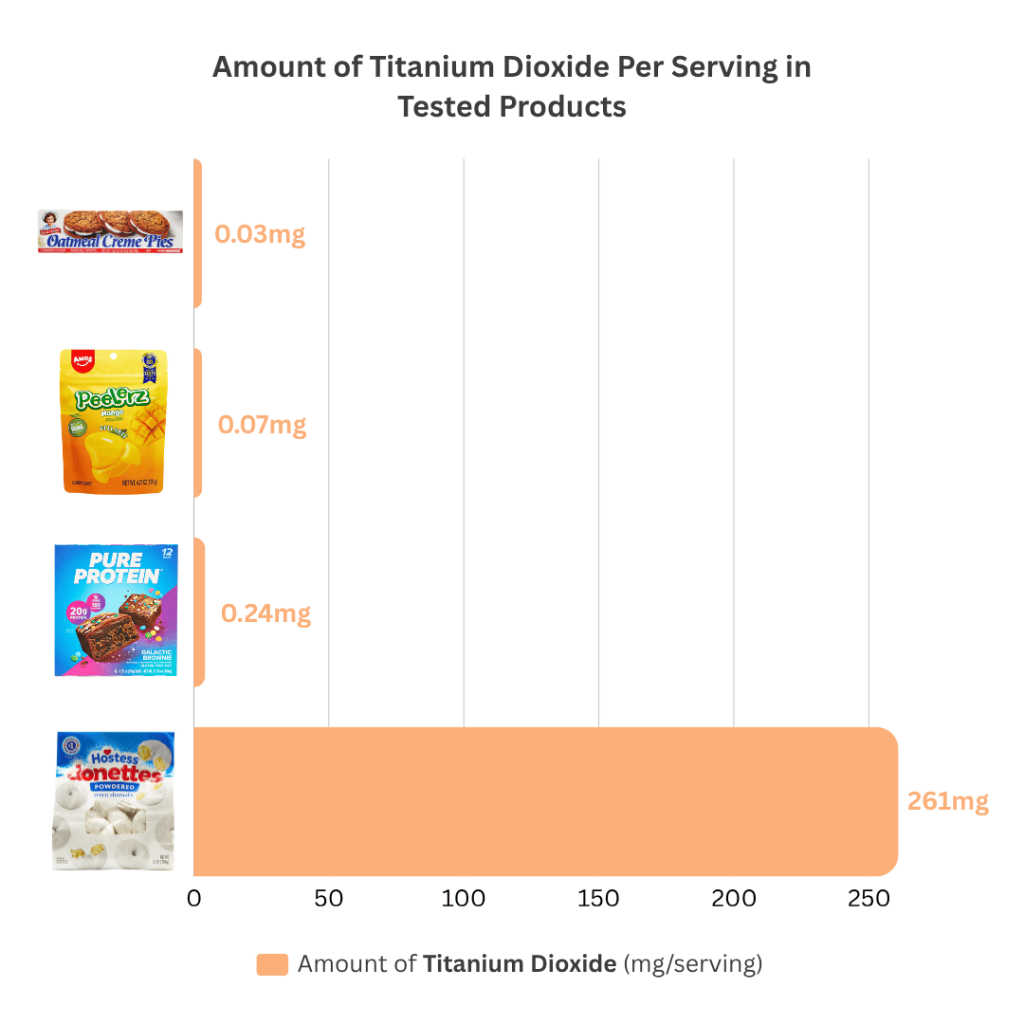
These findings raise serious concerns. Titanium dioxide, a synthetic white coloring agent, was banned in food products in the European Union in 2022 due to concerns about genotoxicity, meaning its potential to induce breaks in DNA strands and cause chromosomal damage3. Following a comprehensive scientific reassessment in 2021, the European Food Safety Authority (EFSA) concluded that titanium dioxide “can no longer be considered as safe when used as a food additive”20.
The levels identified in Hostess’ Donettes are especially troubling given how widely consumed this product is in the United States, particularly among children.
Artificial sweeteners : widespread exposure associated to chronic disease concerns
We tested 21 products for the presence of three widely used artificial sweeteners: acesulfame-K, aspartame, and sucralose. None of the products contained amounts exceeding the Acceptable Daily Intake (ADI) currently established by the FDA or the European Food Safety Authority21,22.
However, the findings become far more concerning when viewed in light of recent peer-reviewed epidemiological research, notably the analyses of the NutriNet-Santé cohort23-25. Nineteen of the 21 products tested contained enough of at least one sweetener in a single serving to exceed broader levels of concern associated in these epidemiological studies with an increased risk of adverse health outcomes, including cancer, cardiovascular disease, or type 2 diabetes.
A growing body of scientific literature supports these concerns, including in vitro studies on cells, animal studies, as well as epidemiological and clinical studies in humans. Many of the most methodologically robust studies now point to two major conclusions: first, that artificial sweeteners do not provide long-term benefits for reducing body fat in either adults or children; and second, that “there may be potential undesirable effects from long-term use” of those artificial compounds, particularly an increased risk of chronic diseases7.
Two major categories of products were analyzed for their sweetener content:
- beverages, including “light” or “zero sugar” sodas, sports and energy drinks, and fruit juices
- “light” or “sugar-free” products intended as alternatives to traditional sweet snacks
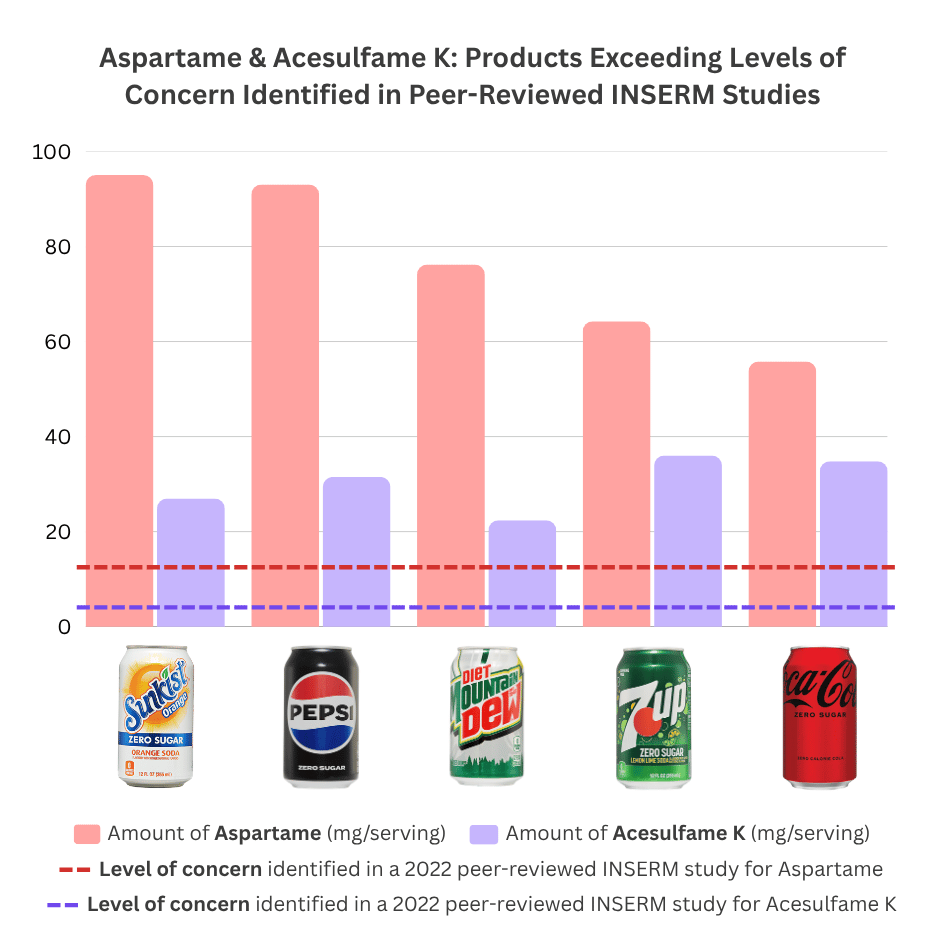
Among the beverages analyzed, the most concerning amounts of acesulfame-K and aspartame were found in sugar-free sodas from major brands such as Pepsi, Sunkist, Mountain Dew, 7UP, and Coca-Cola.
For acesulfame-K and aspartame, consuming only about one-fifth and one-sixth of a can, respectively, was enough to exceed the levels associated in analyses of the NutriNet-Santé cohort with an increased risk of adverse health outcomes. In other words, even relatively small daily amounts are enough to reach exposure levels associated in the scientific literature with an increased risk of cancer, cardiovascular disease, and type 2 diabetes.
These conclusions are based on findings from the French NutriNet-Santé cohort, which followed more than 100,000 participants and has been widely recognized by the international scientific community for its methodological rigor23-25. The International Agency for Research on Cancer (IARC) notably highlighted this research as the first study to identify such a precise and thoroughly documented association between aspartame exposure and cancer risk. The agency described it as “the most detailed” and “highly informative” on human exposure to artificial sweeteners26.
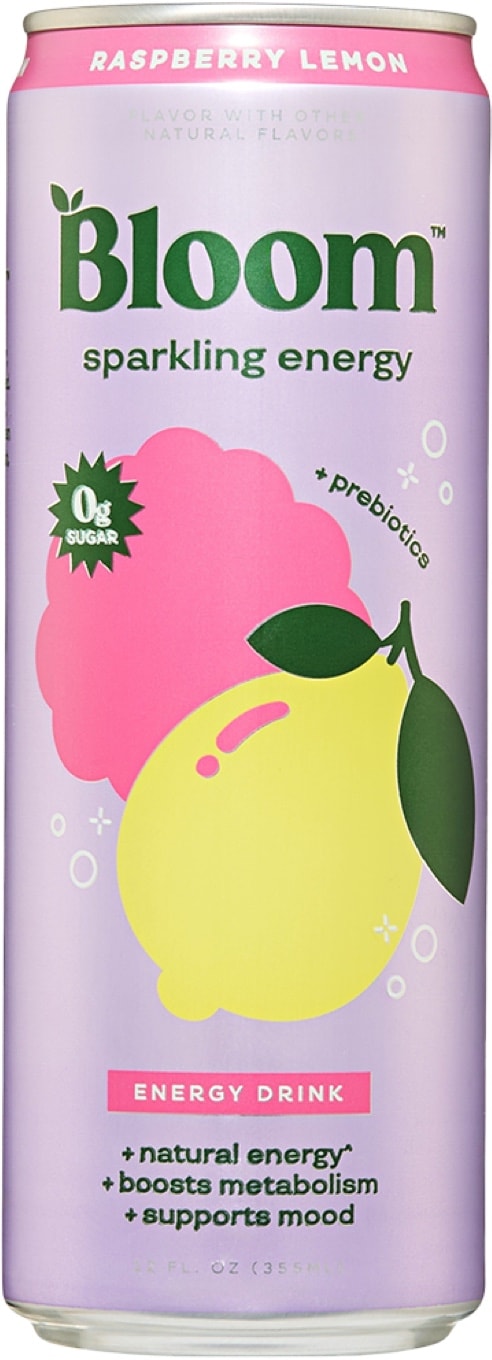
One energy drink contained exceptionally high levels of sucralose
A single can of Bloom “Sparkling Energy Raspberry Lemon” contained 144 mg of sucralose — 42 times above the level of concern identified in the NutriNet-Santé cohort24, and about three times above the dose associated with adverse effects on the gut microbiome and glucose metabolism in a human clinical study27.
These findings are particularly concerning given the widespread consumption of artificially sweetened beverages in the United States. In a large cohort study involving approximately 65,000 American women, nearly 13% of participants reported consuming at least one artificially sweetened beverage per day28.
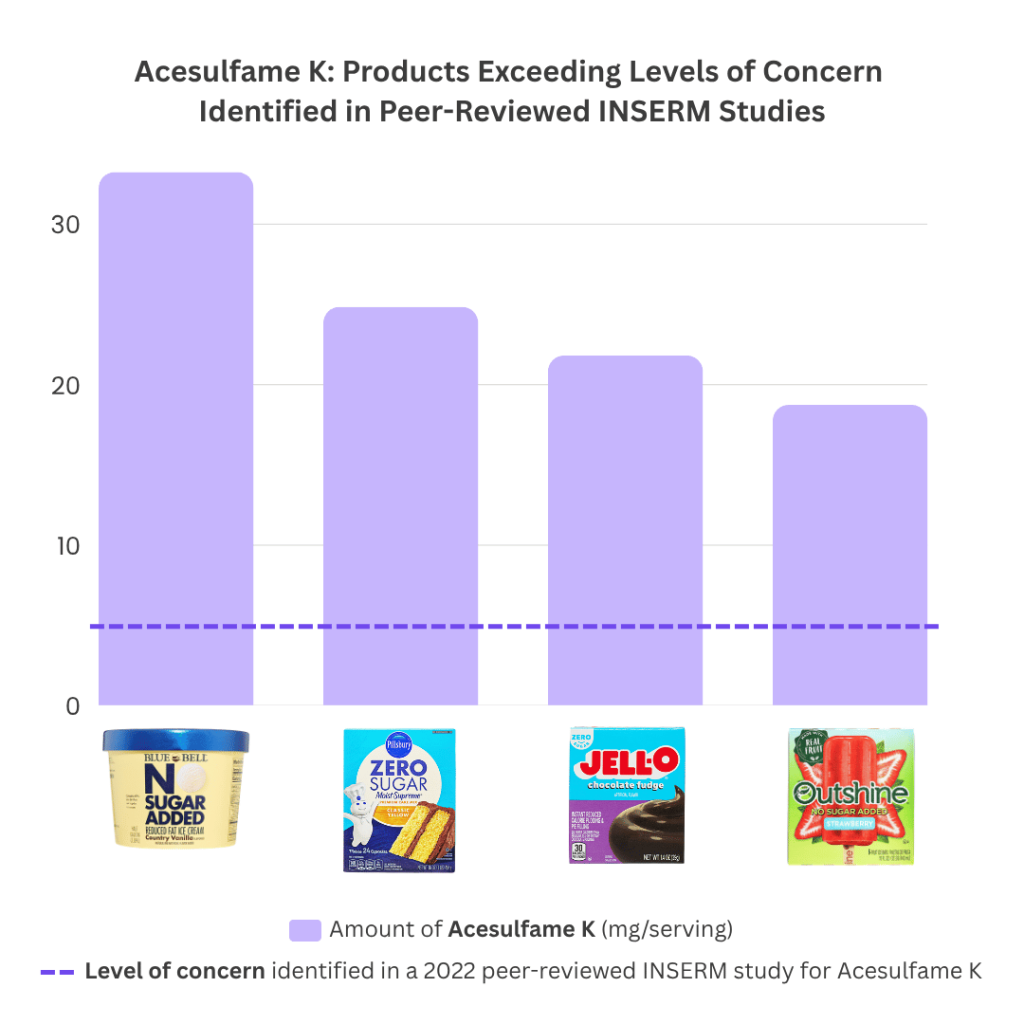
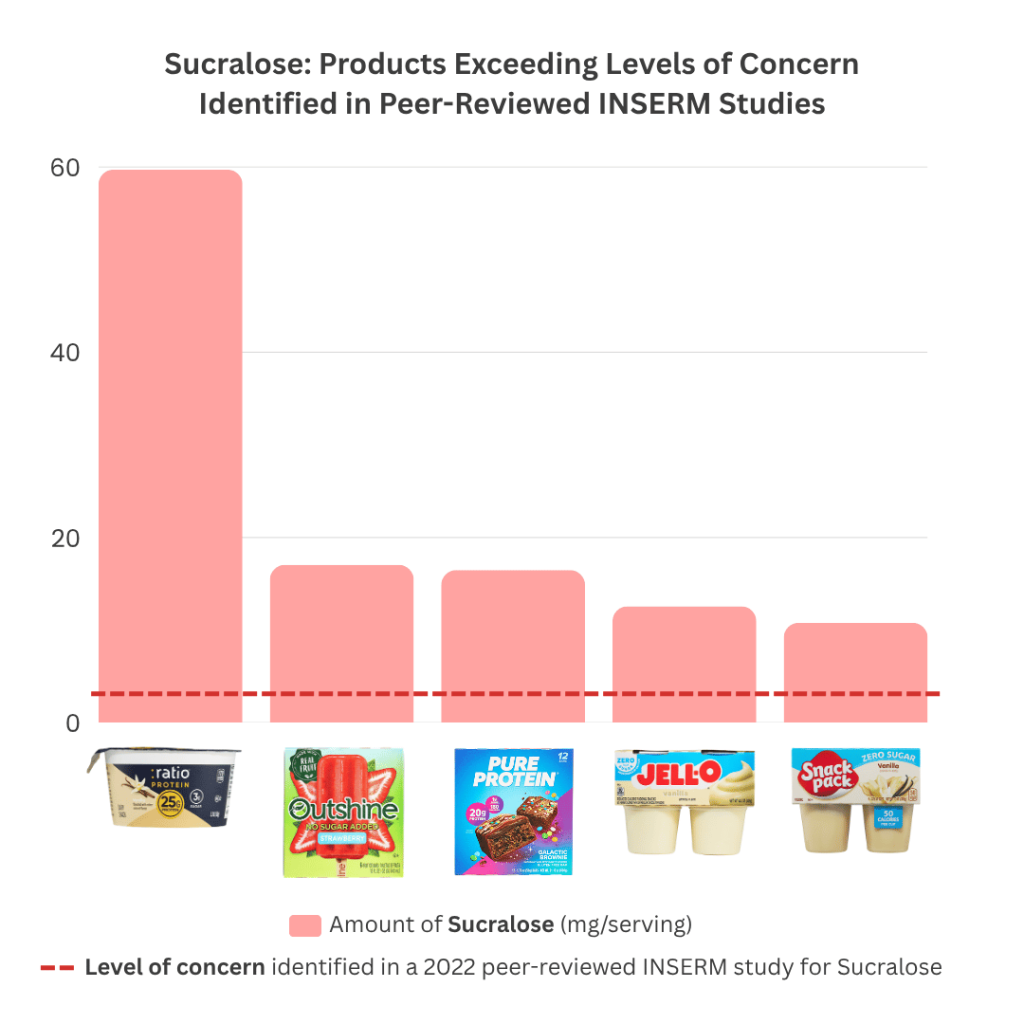
Among the “sugar-free” or “light” snacks marketed as alternatives to traditional sweet treats, sucralose and acesulfame-K were the most commonly used sweeteners.
Of the 11 products tested in this category, 10 exceeded levels of concern identified in peer-reviewed INSERM studies published in 2022 using data from the NutriNet-Santé cohort24-26.
One product stood out in particular: Ratio’s High Protein Dairy Snack Vanilla, whose packaging prominently promotes its high protein content. This product showed the greatest exceedance of the level of concern for sucralose. A single serving contained the equivalent of 52% of the FDA’s Acceptable Daily Intake (ADI) for children for sucralose. In practical terms, consuming just two servings in a single day would exceed the FDA’s daily safety threshold for this sweetener21.
This is especially concerning given that current Acceptable Daily Intakes (ADI) in the U.S. are largely based on older toxicological evaluations and may not fully reflect the latest scientific evidence regarding long-term metabolic and health effects.
At the same time, many consumers now incorporate these “high-protein” and “sugar-free” snacks into their daily diets, often perceiving them as healthier alternatives. These findings therefore underscore the need for greater transparency around the significant quantities of artificial sweeteners present in such products, as well as the fact that some exceed levels of concern identified in recent scientific studies.
What Yuka and CR’s Tests Revealed
The results of our investigation highlight a major issue with the use of additives in food products sold across the United States.
Among the 40 products we tested :
- one quarter contained additive levels in a single serving that exceeded daily safety levels identified by U.S. or European public health agencies
- nearly two thirds of the products tested (25 out of 40) contained at least one additive exceeding broader levels of concern identified in respected peer-reviewed studies.
The additives most frequently found at concerning levels were Red 40, titanium dioxide, sucralose, aspartame, and acesulfame potassium.
These findings are especially concerning given that the potential health risks associated with these additives are among the most extensively documented in the scientific literature.
- For Red 40, California’s Office of Environmental Health Hazard Assessment (OEHHA) reviewed more than 300 scientific studies — including human clinical trials, epidemiological studies, animal neurotoxicity studies, in vitro research and dietary exposure assessments — and said the Acceptable Daily Intake (ADI) would be up to 100 times lower than the current U.S. federal limit taking into account the most recent studies. California has also moved to ban Red 40 and several other synthetic food dyes from meals served in public schools starting in 202714.
- For artificial sweeteners, the World Health Organization reviewed 283 human studies before concluding in 2023 that these additives should not be used for weight control purposes7. That same year, the International Agency for Research on Cancer (IARC), the WHO’s cancer research agency, classified aspartame as “possibly carcinogenic to humans” (Group 2B)26.
- As for titanium dioxide, the European Union banned its use in food in 2022 following a reassessment conducted by the European Food Safety Authority (EFSA), based on the review of more than 12,000 scientific publications29.
Taken together, these results raise serious concerns given how frequently these products are consumed. Many are eaten daily by millions of children and adults across the United States. More importantly, several of these products can easily be consumed within the same day, leading to cumulative exposure to multiple additives of concern.
Contaminants linked to additives: concerning levels found in 6 out of 13 products tested
Beyond the additives themselves, certain contaminants generated during the production of food additives may also pose serious health concerns. Unlike additives, these substances are not intentionally added to food products. They can form unintentionally during industrial processing methods.
We therefore tested several products for the presence of glycidyl esters and 3-MCPD, contaminants that can notably be generated during the production of certain additives such as mono- and diglycerides of fatty acids. According to the European Food Safety Authority, both substances are considered particularly concerning due to their suspected carcinogenic properties30. Their potential health risks were deemed serious enough for the European Union to tighten regulations on maximum permitted levels in July 202331.
Our tests revealed that 6 of the 13 products tested contained glycidyl ester levels exceeding the daily safety levels identified by the OEHHA32. One product in particular — Hostess “Donettes Powdered Mini Donuts” — contained glycidyl ester levels reaching 18 times this limit.
These findings highlight that, beyond reducing the use of additives, stronger regulations are also needed to better control contaminants generated during food processing and establish more protective tolerance limits in everyday food products.
👉 View the full results of the Yuka and Consumer Reports investigation
Industry and FDA Responses
Before publication, Yuka and Consumer Reports contacted the manufacturers of all products highlighted in this investigation to share our findings and methodology and offer them an opportunity to respond. Only four responded to our multiple requests for comment, and McKee Foods, maker of the Little Debbie Oatmeal Creme Pies, declined to comment.
Several companies stated that the additive levels identified in their products comply with current FDA regulations and remain below the acceptable daily intake levels established by U.S. authorities.
Kraft Heinz, for example, stated that the levels of Red 40 identified in Kool-Aid and Jell-O Zero were “within approved limits” and emphasized that the company is in the process of removing synthetic dyes from parts of its portfolio.
Ocean Spray similarly noted that its products comply with current FDA regulations, while indicating plans to transition certain beverages to formulas using natural colors.
Amos stated that the amount of titanium dioxide identified in its gummies remains below the current FDA maximum allowable level and said the company has initiated a reformulation process to remove artificial color additives from the Peelerz product line.
The Consumer Brands Association, which represents the packaged food industry, said that “America has one of the safest and most highly regulated food systems in the world” and argued that the findings of this investigation could undermine public confidence in the food supply.
The Calorie Control Council, which represents the low- and reduced-calorie food and beverage industry, also responded on artificial sweeteners. “Observational studies can identify statistical associations but cannot establish causation,” said Carla Saunders, president of the Calorie Control Council.
The FDA declined to comment on the specific findings of this investigation but stated that it has launched a stronger post-market review process for chemicals and additives already on the market.
Our Recommendations
These findings underscore the shortcomings of the current regulatory framework governing food additives in the United States. In this context, it is essential that consumers have clear, transparent, and reliable access to information about the composition of the products they consume so they can make informed decisions about their health. More importantly, there is an urgent need for the FDA to significantly strengthen its approach to the evaluation, monitoring, and regulation of food additives.
Our recommendations for consumers
We recommend limiting, as much as possible, the consumption of products containing the additives identified as concerning in this study, particularly Red 40, titanium dioxide, and artificial sweeteners such as sucralose, acesulfame-K, and aspartame. In addition, we also measured the levels of BHA and BHT in several popular products. Although the amounts identified did not exceed levels considered concerning for a single serving, these additives should nonetheless be avoided given the numerous concerns raised in the scientific literature regarding their potential health effects33-35.
We also recommend limiting products containing mono- and diglycerides of fatty acids. These additives may contain toxic contaminants resulting from their manufacturing process, such as glycidyl esters. In our study, these contaminants were found at concerning levels in six of the seven products tested containing this additive.
We also recommend avoiding “diet” or “light” products unless specifically advised by a healthcare professional. These products often contain artificial sweeteners associated with numerous health concerns, and whose long-term effects on weight management appear unfavorable36.
More broadly, we encourage consumers to prioritize whole or minimally processed foods whenever possible. Products with long ingredient lists are often ultra-processed foods that are more likely to contain controversial additives (see our report on ultra-processed foods). Conversely, short and understandable ingredient lists are a simple and practical way to help reduce exposure to these substances.
Our recommendations for the Food and Drug Administration
1) Establish a clear and transparent risk assessment methodology
First, the FDA should establish and publish a clear and transparent methodology for assessing the risks of food additives, similar to the approach used by the EFSA in Europe37. Today, the absence of a detailed and accessible methodological framework limits understanding of the criteria used to determine the safety of these substances.
Greater transparency is also essential. The FDA should systematically publish the risk assessments conducted on all food additives in order to foster open, independent, and evidence-based scientific debate, while also ensuring that consumers and manufacturers have better access to information regarding the safety of these substances.
In addition, the methodology used to establish and revise Acceptable Daily Intakes (ADIs) should also be made fully transparent and publicly available. It should incorporate the full body of toxicological evidence through a rigorous weight-of-evidence approach, including human epidemiological studies. Such studies are particularly important for identifying health effects that may emerge over the long term at low levels of exposure, especially chronic diseases, which remain insufficiently considered in current risk assessment frameworks.
2) Regularly reassess the safety of food additives
The safety of food additives should also be regularly reassessed in light of scientific advances. Many recent studies highlight potential effects that were not taken into account during the initial evaluations, particularly regarding the gut microbiome, metabolism, and neurological development38-40.
Such reassessments must rely on robust quantitative risk assessment, incorporating both a comprehensive review of the scientific literature and a precise estimation of population exposure. Reviewing only a few isolated studies is not sufficient.
The report published in 2021 by the OEHHA on food colorings and neurobehavioral effects in children illustrates this limitation clearly14. The agency notes that the FDA evaluated these colorings, including Red 40, in the 1970s without ever conducting a comprehensive risk reassessment since then. Instead, the FDA reviewed only two clinical trials examining the behavioral effects of food colorings in children. In 2011, the agency acknowledged that some children may be sensitive to these substances, while concluding that the available data did not justify revising the Acceptable Daily Intake (ADI) for Red 40, established in 197141. However, according to the OEHHA, this conclusion is based on an overly limited analysis of the available evidence. The agency emphasizes that the FDA did not take into account the full body of recent animal toxicology studies or the mechanistic in vitro data accumulated over recent decades. Following a comprehensive risk reassessment, the OEHHA concluded that the “current ADIs may not provide adequate protection from neurobehavioral impacts in children.” In other words, the thresholds currently considered “safe” may in reality fail to adequately protect children.
Food additive safety reassessments should also be systematic and proactive rather than occurring only after years of public pressure. Today, citizen petitions are often the only mechanism available to request that the FDA reevaluate the safety of an additive. Yet this system is deeply inadequate: most petitions remain unanswered, and when the FDA does act, the process often takes decades.
This is precisely what happened with BHT. A petition requesting that the FDA reevaluate its potential carcinogenicity was submitted in 1977, yet the agency did not announce plans for a new safety review until May 2026, 49 years later42,43.
This approach is clearly insufficient. We call for systematic and timely reassessments of food additives already on the market, grounded in the latest scientific evidence and conducted within reasonable timeframes to ensure consumers are adequately protected.
In this regard, the European Union has implemented a systematic reassessment program for all additives authorized before 2009. Since then, 244 food additive evaluations have been updated to reflect the latest scientific evidence44.
3) Better regulate the use of additives according to product categories
There is a need for stronger oversight of how additives are used across different product categories. An additive used in decorative frosting consumed occasionally does not raise the same level of concern as the same additive found in breakfast cereals consumed daily by millions of children and adults, and which account for up to 10% of daily energy intake according to several studies analyzing Americans’ dietary habits in 2013-201445.
Beverages also represent another particularly sensitive category, as compounds consumed in liquid form are more readily absorbed by the body.
4) Better take into account the specific vulnerabilities of children
Risk assessments must also better account for the specific characteristics of children, including their dietary habits, lower body weight, and increased vulnerability to certain health effects.
This concern has already been raised in relation to Red 40 and neurobehavioral effects such as hyperactivity and attention disorders, but it may also apply more broadly to growth, cognitive development, and the balance of the gut microbiome.
5) Close the regulatory loophole created by GRAS status
The regulatory loophole associated with GRAS (“Generally Recognized as Safe”) status, which currently allows manufacturers to introduce new substances into food without any genuine independent assessment of health risks, must be closed.
The FDA should no longer permit the use of new food additives unless a comprehensive and independent quantitative risk assessment has been conducted by experts appointed by the agency. This assessment should establish levels of use that are protective of human health and ensure that no serious scientific uncertainty remains regarding potential risks to consumers.
👉 See Consumer Report’s investigation
Scientific analysis by Eric Boring, Sana Mujahid, James Rogers, PhD of Consumer Reports and Zoé Kerlo, toxicologist at Yuka.
Because the products were purchased over a two-month period beginning last November, the results may not mirror current levels in every product on shelves today. Even so, our findings highlight why consumers should carefully consider the role of these products in their diet.
It’s important to note that neither Consumer Reports nor Yuka is a compliance or regulatory body. We offer information for consumers to make informed decisions. No legal judgments can be made from our findings. For more information about how we tested, see our methodology.

- ¹ Yuka, 2025. Yuka Study: Additive Quantity in Food Products. https://yuka.io/en/yuka-study-additive-quantity-food-products/
- ² OEHHA, 2021. Report Links Synthetic Food Dyes with Hyperactivity and Other Neurobehavioral Effects in Some Children. https://oehha.ca.gov/risk-assessment/press-release/report-links-synthetic-food-dyes-hyperactivity-and-other-neurobehavioral-effects-children
- ³ CE, 2022. Food additives legislation. https://ec.europa.eu/newsroom/sante/items/732079/en
- ⁴ CE, 2026. Regulation (EC) No 1333/2008 on food additives. https://eur-lex.europa.eu/legal-content/EN/TXT/?uri=CELEX%3A02008R1333-20260218
- ⁵ Health Canada. Food additives. https://health-infobase.canada.ca/nutrition/food-additives/
- ⁶ Consumer Reports, 2024. Food Dyes Banned in School Foods in California. https://www.consumerreports.org/health/food-additives/food-dyes-banned-in-school-foods-in-california-a5379219541/
- ⁷ World Health Organization, 2023. WHO advises not to use non-sugar sweeteners for weight control in newly released guideline. https://www.who.int/news/item/15-05-2023-who-advises-not-to-use-non-sugar-sweeteners-for-weight-control-in-newly-released-guideline
- ⁸ Yuka, 2025. Yuka Study: Food Additive Usage Restrictions. https://yuka.io/en/yuka-study-food-additive-usage-restrictions/
- ⁹ FDA. History of GRAS List and SCOGS Reviews. https://www.fda.gov/food/gras-substances-scogs-database/history-gras-list-and-scogs-reviews
- ¹⁰ Lau K., McLean W.G., Williams D.P., Howard C.V., 2006. Synergistic interactions between commonly used food additives in a developmental neurotoxicity test. Toxicological Sciences, 90(1), 178–187. https://www.sciencedirect.com/science/article/pii/S0890623813003298?via%3Dihub
- ¹¹ Temkin A.M., et al., 2023. Nearly 99 percent of chemicals introduced into food in the U.S. since 2000 were not reviewed by the FDA. Environmental Health, 22, 78. https://link.springer.com/article/10.1186/s12940-023-01004-8
- ¹² EWG, 2022. EWG Analysis: Almost All New Food Chemicals Greenlighted by Industry, Not FDA. https://www.ewg.org/news-insights/news/2022/04/ewg-analysis-almost-all-new-food-chemicals-greenlighted-industry-not-fda
- ¹³ ISO. ISO/IEC 17025 — Testing and Calibration Laboratories. https://www.iso.org/ISO-IEC-17025-testing-and-calibration-laboratories.html
- ¹⁴ OEHHA, 2021. Health Effects Assessment: Potential Neurobehavioral Effects of Synthetic Food Dyes in Children. https://oehha.ca.gov/sites/default/files/media/downloads/risk-assessment/report/healthefftsassess041621.pdf
- ¹⁵ McCann D., Barrett A., Cooper A., et al., 2007. Food additives and hyperactive behaviour in 3-year-old and 8/9-year-old children in the community: a randomised, double-blinded, placebo-controlled trial. The Lancet, 370(9598), 1560–1567. https://pubmed.ncbi.nlm.nih.gov/17825405/
- ¹⁶ Neltner T.G., Alger H.M., Leonard J.E., Maffini M.V., 2013. Data Gaps in Toxicity Testing of Chemicals Allowed in Food in the United States. Reproductive Toxicology, 42, 85–94. https://www.sciencedirect.com/science/article/abs/pii/S0065128118300436?via%3Dihub
- ¹⁷ Neltner T.G., Kulkarni N.R., Alger H.M., et al., 2011. Navigating the U.S. Food Additive Regulatory Program. Journal of Food Science, 76(9), R139–R147. https://ift.onlinelibrary.wiley.com/doi/10.1111/j.1750-3841.2011.02267.x
- ¹⁸ Bateman B., Warner J.O., Hutchinson E., et al., 2004. The effects of a double blind, placebo controlled, artificial food colourings and benzoate preservative challenge on hyperactivity in a general population sample of preschool children. Archives of Disease in Childhood, 89(6), 506–511. https://pubmed.ncbi.nlm.nih.gov/20077213/
- ¹⁹ Stevens L.J., Burgess J.R., Stochelski M.A., Kuczek T., 2010. Amounts of artificial food colors in commonly consumed beverages and potential behavioral implications for consumption in children. Clinical Pediatrics, 49(7), 655–660. https://pubmed.ncbi.nlm.nih.gov/20551163/
- ²⁰ EFSA, 2021. Titanium dioxide: E171 no longer considered safe when used as a food additive. https://www.efsa.europa.eu/en/news/titanium-dioxide-e171-no-longer-considered-safe-when-used-food-additive
- ²¹ FDA. Aspartame and Other Sweeteners in Food. https://www.fda.gov/food/food-additives-petitions/aspartame-and-other-sweeteners-food
- ²² EFSA. Sweeteners. https://www.efsa.europa.eu/en/topics/topic/sweeteners
- ²³ Debras C., Chazelas E., Srour B., et al., 2022. Artificial sweeteners and cancer risk: Results from the NutriNet-Santé population-based cohort study. PLOS Medicine, 19(3), e1003950. https://journals.plos.org/plosmedicine/article?id=10.1371/journal.pmed.1003950
- ²⁴ Debras C., Chazelas E., Sellem L., et al., 2022. Artificial sweeteners and risk of cardiovascular diseases: results from the prospective NutriNet-Santé cohort. BMJ, 378, e071204. https://www.bmj.com/content/378/bmj-2022-071204.long
- ²⁵ Debras C., Deschasaux-Tanguy M., Chazelas E., et al., 2023. Artificial Sweeteners and Risk of Type 2 Diabetes in the Prospective NutriNet-Santé Cohort. Diabetes Care, 46(9), 1681–1690. https://pmc.ncbi.nlm.nih.gov/articles/PMC10465821/
- ²⁶ IARC, 2023. Aspartame. IARC Monographs on the Identification of Carcinogenic Hazards to Humans, Volume 134. https://publications.iarc.who.int/627
- ²⁷ D'Amico F., Peyrin-Biroulet L., Danese S., 2022. Artificial sweeteners and gut microbiota: a systematic review. Microorganisms, 10(2), 434. https://doi.org/10.3390/microorganisms10020434
- ²⁸ Sylvetsky A.C., Rother K.I., 2023. Trends in the consumption of low-calorie sweeteners. JAMA. https://jamanetwork.com/journals/jama/fullarticle/2807987
- ²⁹ BfR, 2020. Food Additive Titanium Dioxide (E 171) under Scrutiny. https://www.bfr.bund.de/cm/349/food-additive-titanium-dioxide-e-171-under-scrutiny.pdf
- ³⁰ EFSA, 2021. Process contaminants in vegetable oils and foods. https://www.efsa.europa.eu/en/press/news/process-contaminants-vegetable-oils-and-foods
- ³¹ CE, 2023. Commission Regulation (EU) 2023/1428. https://eur-lex.europa.eu/legal-content/EN/TXT/?uri=celex%3A32023R1428
- ³² OEHHA, 2010. Glycidol Notice of Intent to List. https://oehha.ca.gov/sites/default/files/media/GlycidolNSRL073010.pdf
- ³³ OEHHA. Butylated Hydroxyanisole. https://oehha.ca.gov/chemicals/butylated-hydroxyanisole
- ³⁴ Sasaki Y.F., Kawaguchi S., Kamaya A., et al., 2002. The comet assay with 8 mouse organs: results with 39 currently used food additives. Mutation Research, 519(1–2), 103–119. https://pubmed.ncbi.nlm.nih.gov/12160896/
- ³⁵ NTP, 1989. Toxicology and Carcinogenesis Studies of Butylated Hydroxyanisole (CAS No. 25013-16-5) in F344/N Rats and B6C3F1 Mice. https://ntp.niehs.nih.gov/sites/default/files/ntp/htdocs/lt_rpts/tr150.pdf
- ³⁶ WHO, 2023. WHO advises not to use non-sugar sweeteners for weight control in newly released guideline. https://www.who.int/news/item/15-05-2023-who-advises-not-to-use-non-sugar-sweeteners-for-weight-control-in-newly-released-guideline
- ³⁷ EFSA. EFSA guidance documents. https://www.efsa.europa.eu/en/methodology/guidance
- ³⁸ Suez J., Cohen Y., Valdés-Mas R., et al., 2022. Personalized microbiome-driven effects of non-nutritive sweeteners on human glucose tolerance. Cell, 185(18), 3307–3328.e19. https://www.cell.com/cell/fulltext/S0092-8674(22)00919-9
- ³⁹ Zhang Q., Chumanevich A.A., Nguyen I., et al., 2023. The synthetic food dye, Red 40, causes DNA damage, causes colonic inflammation, and impacts the microbiome in mice. Toxicology Reports, 11, 221–232. https://doi.org/10.1016/j.toxrep.2023.08.006
- ⁴⁰ Miller M.D., Steinmaus C., Golub M.S., et al., 2022. Potential impacts of synthetic food dyes on activity and attention in children: a review of the human and animal evidence. Environmental Health, 21, 45. https://doi.org/10.1186/s12940-022-00849-9
- ⁴¹ FDA, 2019. Color Additives and Behavioral Effects in Children. https://www.fda.gov/media/131378/download
- ⁴² The Washington Post, 1977. A Citizens Group Call for BHT Ban. https://www.washingtonpost.com/archive/lifestyle/1977/07/27/a-citizens-group-call-for-bht-ban/9f59fe10-3d06-4267-9fc8-6d59481386c4/
- ⁴³ FDA, 2026. FDA Finalizes Food Chemical Safety Post-Market Assessment Program, Launches Reassessment of BHT, ADA. https://www.fda.gov/news-events/press-announcements/fda-finalizes-food-chemical-safety-post-market-assessment-program-launches-reassessment-bht-ada
- ⁴⁴ European Commission. Re-evaluation of food additives. https://food.ec.europa.eu/food-safety/food-improvement-agents/additives/re-evaluation_en
- ⁴⁵ The FASEB Journal, 2017. Abstract 648.18. https://faseb.onlinelibrary.wiley.com/doi/abs/10.1096/fasebj.31.1_supplement.648.18


Thank you so much Yuka!!!
Thank you for all you do….I don’t buy anything anymore without checking Yuka app.!!
Glad to hear you are trying to get changes made.
Thank you, Julie!
Good to know. Anyone who gives a bleep about their health would have eliminated every one of those foods long ago. Appreciation for being able to check items with you. I access pretty often.
Again, corporate food companies poison the public. Thank you to Yuka for highlighting what we should avoid. It’d be a LOT easier if they simply weren’t allowed to use these additives!
Thanks for the info! Very helpful 😁!
Thanks for the good work you are doing to make us aware of the additives. Ever since I got the Yuka app, I have used it to scan barcodes and have rejected quite a few products that I used to buy. Costco has quite a few products that sound good until you get to the additive list.
THANK YOU FOR THIS!
Thank you!
Thank you Yuka! It’s so hard to find healthy foods. We take the time to scan just about everything we eat. Unfortunately, there are not a lot of healthy foods on the grocery store shelves. Even when they advertise “No Junk” or “Clean”. These manufacturer’s need to be held accountable for all the unnecessary additives that they add in the name of profit. Awareness is key! You are shinning the light!
Thank you
It’s horrible what is hidden in the food sold in America! We must put a stop to the manufacturered processed foods sold to American consumers, unchecked and poisonous! Many thanks for your diligent investigation to reveal the truth! I truly appreciate the hard work and dedication of your team! I use Yuka all the time and have shared it with my family and friends! I love while using Yuka I have met other consumers using the app!
Thank you YUKA!
Yes, the Yuka App has been a life-saver for my husband and me. We use it for all our food purchases. The study and write-up was excellent! Hopefully there will be other similar research done on other food products. Thank you!
So grateful to Yuka for healthy living
Thank you very much! I hope that RFK Jr gets this report, reads it and acts upon it.
Thank you for your service of making America healthy again…….we use your app to check the ingredient’s of all products when we go shopping and it is very helpful and healthful,,, ,,,,,,,,,,,,,,,,,,,,
So very thankful for your study and dedication to help consumers Make educated choices about food and creams. Couldn’t go shopping without your app. Thanks again
I don’t understand why the US can’t just make food without all of these additives. Europe does it and people eat it. It is just so alarming all the crap that is in food. I use the Yuka App all the time and it is such an eye opener and decision maker in what food is bought. Sharing the link to my friends and followers.. something needs to be done to get this stuff out of our food!!
There are always trade offs in the products we use, I would suggest consumers should understand the risk involved, for example in the produce section you can pay more the “organic”, some consumers choose to take the risk by buying non-organic. Trying to understand what you are reading in the list of ingredients is a challenge, Yuka helps a lot with that, which in turn helps you decide the risk. If one can’t understand the risk then don’t buy it, that’s what will get producers to change, when their products don’t sell. Being an educated consumer is really our only protection.
Thank you for the hard work you have done and continue to do. The FDA needs to be held accountable.
Thank you so much for this information and the hard work your company does to educate us on healthy ingredients in food and products. I have recommended Yuka to all of my family and friend’s.
And they wonder why “Americans” are so fat and unhealthy. Keep feeding us poison!
You are correct! Many people buy what they can afford and not all are educated when it comes to product ingredients.
For big business it’s all about the Almighty Dollar.
As long as the current administration continues to cover up and deregulate the food industries Americans will die.
It didn’t start with this administration. It’s been going on since lobbyists have taken over Washington primarily since the end of WW2. I’ve got bad news for you, this isn’t a red vs blue issue.
I would love for you to do this with protein bars and heavy metals! Especially the bars that are marketed as organic and plant based.
HOW big pharma POISONS OUR FOOD SUPPLY so we can be their clients FOR LIFE because every one of them needs a ROLLS ROYCE PHANTOM IN HIS garage to be “happy”
also DON’T FORGET Mr. depopulation BILL GATES
Keep up the good work. I wish you were the head of the FDA.
Europe doesn’t allow chemicals in their food…only America. We are slowly being killed through our food in America. That is why cancer is on the rise here.
Yes but Coke Zero and all of these other diet sodas are widely available through Europe!
Probably a major reason why food tastes better in Europe
Thank you for this information! And Thank you for your app, it is a great tool when shopping. Since I was free of cancer I yo using the yuca app
Thank you YUKA for all of your hard work and valuable information.
America is killing her citizens!
We should never have these additives in our food.
Thank you for this very valuable information.
I am amazed at the results.
can’t we do better or as well as Canada and Europe?
Wow! 😱
Thanks for the information. I have been avoiding most of the sugarfree products for about twenty years.
I really thought the popsicles were sugar free and safe!!!!!!!
Same .. I actually used that as my ‘healthy’ sweet treat every night. No more!!!
I get that parents are stressed working, commuting, paying bills and trying to do their best for their families. Unfortunately what food they’re putting into their and their kids bodies, most of the time takes second place next to the speed of life. We need to take the European lead and mandate that companies should not be poisoning our kids or ourselves with products they produce.
Petition signed.
Thank you for this information! And Thank you for your app, it is a great tool when shopping.
Unhealthy food is big business, and mitigating the intake of those foods through our healthcare system is equally big.
Thank you for all of this information,I don’t do any of these products but I will let people know about all of this …
I love the app. So helpful. I put so much back on the shelf. And I can’t believe we still use Red Dye!
Thank you for the study and publishing. Hopefully regulations will improve, until then your app is a great tool when shopping.
Great study. Thanks for doing all of this work.
Thank you for this wonderful and detailed article. As a Registered Dietitian, it is challenging to process all the “ food noise” that is out there. As I tell my clients, eat from the land and don’t get caught with all the social media hype.
Great article. Thanks for all you do. Our FDA has dropped the ball decades ago. Pretty much bought out by food manufacturers. Thanks to YUKA app i quit buyer so many bad foods. I also stopped drinking sodas.
It sickens me to know how the FDA is allowing this to happen in our country… if enough of us speak out probably they’ll be changed thank you Yuka
Great research! Thank you for all that you do and for the app! We use it all the time. It’s always amazing that a product can appear to be a good choice by the outer packaging and then it scores a zero. Appreciate your hard work to help protect and inform us.
THANK YOU Team Yuka!!
I really appreciate reading what not good for it’s very helpful I do my best to stay away from the wrong food Thank you for up date I will live longer
Thank you!
Thank you and your team for keeping us so informed on matters of health and wellbeing. Awesome app.
Thank you for this great article. Some things, especially in our food system is causing such high rates of diseases. We need to educate ourselves to these possible causes and make appropriate changes for our wellbeing. Love your app! Keep up the great work!!
Thank you for the information, for sharing the in-depth research. Much appreciated.
Using Yuka app every time I shop for anything…it has to be GREEN to be purchased.
Keep up the good work.
Such an excellent and informative article. Thank you for all you guys do. I love your app and have shared with many.
Not only has my family and now friends use the Yuka app to guide us with our shopping; my husband and I bring foods back from Europe when we can. (He works for an airline). Please keep spreading the word because consumers do have the power to make the change. If we stop buying the products that are bad for us and the products aren’t moving off the shelf – money can’t be made and hopefully we will see change so consumers have healthier options. Keep up the good work! It is making a difference.
Thank you very much for this very informative article regarding food additives. Also thank you for all that Yuka does to help us choose better food and product options, so we can have healthier bodies!
Really good article. Thank you
Thank you for sharing this.
My wife is gluten intolerant, yet she can comfortably eat pasta and other foods made with traditional Italian flour. That alone says a lot about the differences in food production standards.
It raises an important question: why are so many additives, preservatives, and processing agents allowed in foods here that are restricted or prohibited elsewhere? Many people believe that powerful corporations, lobbying efforts, campaign donations, and special interests have too much influence over the decisions made by our elected officials, often putting profits ahead of public health.
Thanks for your amazing work! There is an extremely good information about how to learn to choose what we will serve as food . I love your recipes too!
I say “wow!”, but I’m not surprised, really. It’s a shame that the USA has been allowing tainted chemicals in our foods for DECADES. Despite the FDA and USDA, who basically allows for certain preservatives in the foods, these organizations aren’t cautioning the public about the underlying causes of many health-related conditions. I don’t care about the “shelf life” of a food product. Shelf life really has no place when it comes to “real foods”. Real foods have an expiration date called food mold and spoilage.
It’s really infuriating that our own government is aware that they are poisoning us for the almighty dollar, keeping us sick to make sure they can fill their pockets. Thank you for your ongoing efforts to educate. I will share this with everyone I know and love. Thank you so much!
This in such an amazing app! I share it with everyone. It’s important to know what we put on and I’m our bodies a.k.a our forever flesh home.
Thank you for all the work you do to help us choose “good” for us products.
I only buy Yuka approved products.
Keep up the hard work in exposing these harmful additives and hopefully all the major food companies get the message, we want and need change.
Thank you for all the hard work! Love the app and your recipes.
Thank you Yuka, for creating this app. I am now making better choices for me and my family.
Thank you so much for taking the time to do this research. It’s absolutely heartbreaking that Moore is not being done for the health of all of us in the United States. Your hard work is valued and I appreciate it and thank you and your team for trying to help.
Really tics me off the U.S. is so far behind Europe! Why is this? It makes absolutely no sense. You would think the United States would be leading away.
I can’t believe anyone with the most basic info regarding nutrition would eat any of the products you tested. Please identify the most tricky ingredients and foods that are thought of as health foods – which can have bad ingredients even though they are sold in health food stores.
These are the five food groups that are in practical every dollar store. Low income, single-family homes send their kids all the time to the dollar store to get food. Especially when they’re in a food desert! These dollar stores are on peppered across nearly every city in town out there.
Test some foods that are not totally obvious that they are terrible! Many healthy foods have concerns that should be highlighted.
How about carrageenan, an emulsifier that is used in ice creams, protein drinks (considered healthy!?) Per Dr. Mark Hyman this ingredient causes cancer.
This is why heart disease and cancer is so wide spread. Our leaders should demand changes. Thank you for your hard work.
People deserve to feel safe when buying food products. Some effect health in known and unknown ways. Please stop and test and correct laws or make new laws as needed. This costs us all financially and personally.
I thought the artificial food coloring was supposed to be coming out of these products? What is taking so long?
We never buy anything without first scanning the barcode with the Yuka app. If the product contains harmful additives – we don’t buy it, period ! It took us a while to develop a list of healthy products, and to eliminate products that we used to buy that we found to contain harmful additives, but now we know what to buy and what to stay away from. And little by little, all of our family is doing the same.
Thanks Yuka !!
Thank you for the Yuka App. and taking a stand and researching our products and educating the American public on how many foods, drinks and other products are poisoning our bodies and making us ill. I will do my part and help to get the word out to family and friends.
Thank u very much for ur work hard that very appreciated!🙏🙏 cuz chemical foods cause people r very sick and die that how sadly!😞
Thank you YUKA!!
I try to stay with all natural unprocessed foods and organic foods.
Truly eye opening thank you for your efforts to continually educate the public and attempts at holding these companies to a higher standard
Truly appreciate all the hard work you’re doing for this cause! Thank you
Shocking
My sister put me down with Yuka we both use it every time we shop very valuable. You all should take over the FDA in America.
I see no luxury with the “convenience lifestyle” they began to ruin us with back in the day. Take our lives, health, gardens and happiness back. <3
This is absurd!! We need to pay more attention to what we are eating. I know a lot of people trust FDA thinking if they sell it is ok to consume. No. So wrong! We need to advocate for ourselves since clearly the people that are in charge are not doing what they are supposed to be doing. Thank you for this extensive research and sharing your findings.
When the FDA approved thalidomide so many years ago I never trusted them again. This left newborn babies without limbs and worse. I thank you for your important work on researching products. We all need to be educated on what we are ingesting, especially for the children.
Thank you for looking into and finding out this information; and for sharing!
The US should take stronger action to limit or remove food additives in breakfast cereals, sodas, snacks, and desserts that have been linked to potential harm to human health and are already restricted, limited, or banned in other developed countries, particularly across Europe. The current disparity between food safety standards raises an important question: why are ingredients considered too risky elsewhere still widely consumed by American families, including children?
Many highly processed foods sold in the United States contain artificial dyes, preservatives, sweeteners, and chemical additives that have faced scrutiny for possible links to behavioral concerns, metabolic disorders, inflammation, endocrine disruption, and other long-term health effects. While scientific debate continues around some ingredients, the precautionary principle adopted in many European nations places greater emphasis on consumer protection when credible evidence of risk exists. In contrast, the U.S. regulatory system often allows additives to remain on the market unless overwhelming evidence proves harm after widespread exposure has already occurred.
The Food and Drug Administration (FDA) should be pushed to modernize its review process for food additives and prioritize public health over industry convenience. Specifically, the FDA should:
Reevaluate additives permitted in processed foods that are restricted or banned in Europe and other developed nations, especially those marketed to children.
Require independent, updated safety testing for artificial dyes, preservatives, and chemical additives that were approved decades ago using outdated scientific standards.
Improve transparency and labeling requirements, allowing consumers to clearly understand what ingredients are in products and any known health concerns associated with them.
Establish stronger standards for products marketed to children, particularly breakfast cereals, candies, sodas, snacks, and desserts that contain high levels of additives alongside excessive sugar.
Close regulatory loopholes, including practices that allow certain ingredients to enter the food supply with insufficient oversight under “generally recognized as safe” standards.
Consumers should not have to wonder why multinational companies sell cleaner versions of the same foods overseas while using more controversial ingredients in products sold in the United States. If companies can reformulate products to meet stricter European standards abroad, they can do so for American consumers as well.
This is not about eliminating choice or banning convenience foods. It is about ensuring that food sold in the United States meets modern safety expectations and reflects the best available science. Public health policy should favor prevention over reaction, particularly when children and long-term health outcomes are involved.
The FDA has both the authority and responsibility to reassess food additives in light of evolving scientific evidence. Americans deserve food standards that prioritize health, transparency, and safety at least as strongly as those in other developed nations.
Unfortunately, you’re preaching to the choir here if you remember of Yuka, you already know this stuff! Yuka and consumer reports needs to market to low income families to let them know.
There is never a good reason to add additives to foods, its a shame what has happened to our food industry. Please seriously consider enforcing removing these toxic things for foods.
I like to have cereal for breakfast with blueberries added. A major concern to me is that many of the boxed cereals have BHT added to the packaging material which I assume comes in contact with the product (inner wrapper). Can you please tell me what is being done about this as I thought someone was representing a group visiting Kelloggs in Battle Creek MI about this very same subject (I never heard if they had any success in their fight against it). I think they didn’t succeed as I still see it listed on my cereal cartons. Thank you for your response.
There are many clean cereals on the market. Choose wisely.
Thanks Yuka
If our food is healthy to begin with, why dress it up in additives to make it unhealthy? It’s all due to greed, to sell more no matter to the health issues.
Thanks to Yuka and Consumer Reports for publishing this comprehensive article. What FDA is not doing is unforgivable and irresponsible. thank you as well for the Yuka app-it is priceless.
This helps us so much! I appreciate what Yuka and their team do to make our lives better, and keep us healthy. Thanks for everything guys!
This helps us so much! I appreciate what Yuka and their team do to make our lives better, and keep us healthy.
I forgot to thank Yuka for all the “WONDERFUL INFORMATION” they provide when I wrote my comments about my son back in the 70’s when he had issues with hyperactivity. THANK YOU, THANK YOU, THANK YOU!!!!
Petition signed
Way back in the 1970’s when my son was in grade school, I was having issues with him being hyperactive and misbehaving also bad headaches which included vomiting when he would cry due to the extreme pain he was in. One afternoon I saw a Dr. Finegold on a talk show talking about children and food additives. He explained the issues with food dye and artificial additives and how these things could cause hyperactivity. I purchased his book and started making everything from scratch using ONLY real flavorings such as vanilla etc. when I baked. My son was no longer permitted to drink Coke or Pepsi due to the artificial coloring same with Kool-Aid. To make a long story short he was a changed kid to the extent that I received a phone call from the school principal the following school year asking me what I did with my son that he was so well behaved! I was lost for words at first, but I did explain the issue with our son and how I changed his diet. Needless to say, he was shocked! Later that school year my son’s teacher called to tell me they were having a class party, and he wanted to know what treats he should serve that wouldn’t affect our son. I told him I would be happy to make all the cookies and baked goods.
I honestly can’t believe that after all these years nothing has changed much with the food supply for the better! I have told this story to many people, and they are often in disbelief. The FDA needs to take action NOW!!
Petition signed! I love the Yuka app and appreciate all the great food and product information. I use this app every time I shop.
Thank you so much for this information. I don’t have any faith that the food supply industry cares about the consumer. They care about money. When consumers get ill this is good business for the Healthcare industry. I’m very happy that I’m gardening again. There is a huge difference in the taste compared to store bought vegetables with all those pesticides on them. Thank you again YUKA.
Thank you, Yuka!
Yuka has completely changed the way I grocery shop!!! An ‘Outstanding’ idea👏 I share it with my fellow shoppers to encourage them to take advantage of this App !!! It could seriously save you from many health issues!!! I’m 68 & I’ve consumed many of the products as a child! My Dad’s 3rd job was loading Coca-Cola trucks at night! It was a staple at our house😬 And most of my back teeth are capped$$$! I woke up yrs ago on these issues & YUKA has enabled me to make swift & Healthy choices at the store for over 2 1/2 yrs now.
Sending very Special Love to All at Yuka 🥰
Thank you❣️🙏’s that your endeavors are Blessed Abundantly!!!!!!
Thank you. I signed the petition.
Thank you Yuka🙏🏼 for you caring enough to help Humanity be aware of all toxicity in all processed foods as well eating the rt foods also your research 🔬 & proof of findings these foods are cancer causing also all health issues sad 😞 here in the U.S.A . always Grateful for you❣️✌🏼🤍🌞✝️👣🕊️
PLEASE SEND ALL THIS INFO TO RFK JR ….as he is on the task force for better health‼️
LOVING THE YUKA APP AND HAVE EVERY ONE IN MY FAMILY USING‼️
THANK YOU ‼️
Ever since I cut out foods, drinks, dental products, and medications with artificial sweeteners, my IBS symptoms have practically disappeared.
I’m excited to have Yuka as a guide for healthy food choices. Thanks for the guidance.
I have just signed your petition. Thank you for helping to make a change in what humanity is consuming. Please provide a whats app link I can share so that more people can sign the petition.
Thank you Yuka, I hope everyone signs the petition
I have been using the Yuka app for the last couple of years and have totally changed how I shop and what I allow in and on my body.
Thank you for helping people not poison themselves…it’s not like anyone else is out there trying to protect Americans from Food INC. and their poisons.
I absolutely love the YUKA app. I try to use it for everything before I buy it. Sometimes I’m in a hurry and if i didn’t use the app. I get home and find out I bought something that wasn’t good. I am getting to the point where I use it for everything before. Thank you YUKA!
Thank you for all the information you provided to all who wish to read and improve their health.
I signed the petition. Thank you for having this wonderful app! I use it all the time!
I’m impressed with the amount of insight provided by Yuka concerning shelf ready foods and their ingredients. It’s so easy to overlook the makeup of some of our favorite foods and not realize how good or bad it can be for our wellbeing. Every time I check the app or get an email, I learn a little bit more about what I might be eating. Will I live a few years longer, maybe, maybe not, but I do feel better mentally knowing I can make better choices. Thank you Yuka
How about bioengineered foods?
Thank you for doing all the research needed to help the USA public purchase healthier food products. I love the Yuka App. I always refer to it for what brand of product I want to purchase. Please keep up the hard work.
I believe NOTHING coming out of California, The World Health Organization or the FDA. They are all corrupt and definitely NOT to be trusted.
So interesting and concerning! We scan all of our food with the Yuka app and have been shocked at how poorly much of the marketed “health” food scores. Our family is now 90% cook from scratch (whole grains, vegetables and fruit) The food tastes better and I feel good serving it to my granddaughters. Thank you!
Thank you for this article. Both my husband and I have stomach issues. Whenever we travel to Europe, the issues disappear. When we return home, they resurface. This is despite the fact that we eat organic, unprocessed foods. We choose any prepared foods that have the cleanest ingredients and make most of our own foods.
Hello ! In France prescription drugs , antibiotics , many others … come with titanium dioxide and / or aspartame , all last year had to ask to switch several times ; Pharmacists have to look in their books or internet to believe me when I say it’s been outlawed or bad or they say they they don’t know what they are .
I use your application both in France and US !!! Thank you !
Amazing work… I use Yuka (used to use fooducate until they went subscription only) for every item I purchase. Makes my shopping take longer, and people think I’m weird, but I am 66, look like I’m 45, and weigh less than I did in high school. My skin (largest organ in the human body) is in great shape.
Eat less and eat better. Stay away from processed foods, period. Drink water with a bit of lemon or tart cherry juice.
It’s not that hard to be healthy, and thank you Yuka! Thank you, thank you, thank you!
It’s extremely hard to stay healthy without this app.
The American corporate food producers are literally trying to kill us for profits.
We need Yuka and apps like it to protect ourselves and make better decisions.
I’m 61 and in the best shape I’ve been in for years, thanks to detoxing with Yuka guilding.
I’ve been concerned about the chemical dumps into food for 50 years. We’re slowly being poisoned and rather than fight back we keep eating the poison. Thank your CR and Yuka for doing the work the FDA should be doing
Great information for people to know to protect their families.
Thank you for all the hard work…otherwise we would never know half of what we are being fed….Love the petition!!! signed it and shared it….
Thank you Yuka for caring about humanity! Our government needs to step up to the plate! So many bad things have been done and I hope time can fix and heal! I appreciate all your hard work! GOD BLESS ❤️
Although we don’t buy any of these products at all.. I greatly appreciate the work and education you provide for people to make better decisions on what they eat, as well as what these companies are putting in there products and deceiving people as to what is in there, Using words like sugar free, with 3 different chemical sugars in it and 20 grams of protein but they add 30 grams of chemical sweeteners.. Such Deception in the food industry.. Thank you again for all your hard work.
Thank you Yuka for always looking out for us, the consumer. Our family uses the scan through the app for everything. So greatful for this valuable information!
Thank you Yuka for this valuable information. I agree the government isn’t doing enough to stop the manufacturers from pumping all this crud to not our food but most of these foods are consumed by the children out of convenience so it’s poisoning our children
Thanks for this valuable information
I believe FDA is taking action additives. I believe Robert F Kennedy Junior is doing a great job. It will take time to fix all of the problems, no matter who’s in there. There will always be some problems with the food additives I think your best suggestion is for them to keep up with it because industry continues to change the products all the time.
Reporting by Consumer Reports’ Paris Martineau.
God bless you folks and I’m so happy for everything you do I don’t know what I would do without you. ❤️
Nutritionists, regulators and food scientists could get together at a conference to agree on the goals of these additives and discuss how to meet these goals at reasonable cost with no toxic effects. FDA could be one of many sponsors of the conference.
Paul Sharpe, Ph.D
Agricultural scientist
Thank god for Yuka. I have learned so
Much! I try to eat healthy since I have learned from Yuka all the bad effects additives and chemicals have on our body! Keep up the good work!!!
Thank You for the information. Government politicians take money from big Pharma companies. The sicker the people are the more money they make. We must force the change they will not do it for us. Call your congressman and let them know.
In America they make money from people being sick. The food is one of the things contributing to this. Thank you for educating people and please don’t stop!
Thank you for this information. I’m shocked but not shocked. I appreciate Yuka for all of the much needed information and sharing it with us. 💜
THANK YOU FOR WHAT YOU DO. Thank you for making it so much easier for consumers (esp in America) to make better, healthier, more educated purchases. Haven’t stopped using your app since we were first introduced to it three years ago, and haven’t stopped recommending it! May God protect and bless you all.
Thank you so much for your exposing and sharing this comprehensive, detailed information that I was unaware of. Our government must make a greater effort to ban all these additives and toxic ingredients in our food. We are more mindful in selecting healthy, fresh food even if we need to spen more time cooking it.
Where can I get a list of the 40 foods?
Hello Nancy, you will find it in the following document:
https://article.images.consumerreports.org/image/upload/v1780318766/prod/content/dam/CRO-images-2026/Special%20Projects/Consumer_Reports_Additives_and_Contaminants_in_Processed_Foods_Test_Methodology_And_Results_June_2026.pdf
The link to this document is also included in the article, in the “Method” section.
Have a great day,
Zoé Kerlo
Toxicologist at Yuka
Thank goodness for you!!!
I follow your advise constantly !!!
Thank you for this information and all you and your team do much appreciated keep up the great work…..will definitely use this new information when buying groceries
I love the Yuka app. My kidney numbers are raising more every time I have bloodwork, so this app is helping me immensely.
What foods are helping your kidneys? I am asking because I have 3b kidney disease.
Vega, Sharon is saying that her kidney values have increased as seen in her improved bloodwork values bc she’s using the YUKA app to make better food choices in her diet. I wish you well, you can do it also. God bless.
Thank you for this comprehensive and thorough food investigation. It is really alarming how many dangerous chemicals are added to everyday foods for “improving” taste, texture, appearance etc.
Excellent app it makes it easy to scan food products and quickly understand whether they are healthy choices,the information is clear accurate,and helps me make better decisions about what I eat.Highly recommended thanks.
Great job! Thank you for the information. I wish someone would do the same for supplements. Although they may not be harmful, I am convinced a lot of resources are wasted on things that may do no good at all.
Thank you for these reports! Awareness is key. The official cogs move slowly so we need to be proactive.
This type information is quite valuable for health-conscious consumers. Hopefully you have in place safeguards to protect your freedom to independently share this type info without the food industry making moves to silence such research. Given the taste of current dietary-deficient intellectual decision-makers in Washington… BTW, the Yuka app is quite practical, informative and intellectually healthy!
There should be legal & personal penalties asserted to manufacturers that practice utilizing these chemicals.
I started using the Yuka app years ago and it has changed my lifestyle for the better. The only item I purchase from the grocery store, that I really shouldn’t, is ice cream. Everything else is fresh meats (grass fed and finished and but normally from the local butcher), vegetables, eggs and very selective dairy products so I can make 98% of my meals from scratch. When I do have a sweet tooth, since I live by myself, I will go to the local bakery and purchase something freshly made. I know they may be using some products that they shouldn’t, but for the occasional pastry that I have, I’m still staying pretty healthy in my eating. Thank you for everything you are doing to continue to educate us and our governments, even though they may not be listening, your subscribers are.
I have found that Breyers ice cream is the best for me, it does not contain carrageenan, something I cannot eat but is in many products!
Hagan Daas has sugar, cream and real flavors only.
Thank you for this informative article. Can you please comment on tabletop packets like Stevia in the Raw, Equal, Splenda, etc., the healthiest choices and maximum packets per day.
Did you use your Yuka app to scan the product? I only use a small amount of natural raw honey for coffee
Thank You YUCA team for all the work that went into this study! Greatly appreciate your app that I use on each shopping trip! I have my friends & family doing the same thing. I ran into another shopper using the app and she pointed out a product (quiche) from Costco (a favorite I buy on occasion,) had TRANS FAT in it! I put it back and will not buy that ever again!
Thank you so very much for your support and information
Excellent read! I wish I knew about the Hostess Powdered mini donuts when my kids were young. Thank you for all you do!!
I wonder why do people buy unhealthy food? I try not to. I haven’t bought bread in many years,I make my own. I buy organic when ever I can. If we wouldn’t buy unhealthy foods it wouldn’t be in the grocery stores anymore. Just don’t buy what makes you or your family sick. We have to take care of ourselves, our government doesn’t give a damn.
Thank you Yuka for reminding us not to eat unhealthy foods!
Unhealthy foods are often cheaper, so people who are price conscious may buy them.
Thank you guys for everything that you do. My husband and I really appreciate all that you do. Continue to make the world aware and safe❤️
Thank you for doing this valuable research and for making it easier to find and avoid these toxins with your easy to use Yuka App
Thank you for the excellent article. I appreciate the work you put into investigating these products.
Great article. I really appreciate both the app and all the work you are doing for awareness and health!!!
Your app has been an absolute game changer and I’m very grateful!
Thank you for this research and information!!!!!
Great job! No reason for the start to adopt the European banned additives and go from there.
love your app, i use everytime i shop
Why didn’t you list all the products studied? Also is stevia not good? I thought Splenda and Stevia didn’t affect diabetes?
Hello Zoie,
All the products, tests, and results are available in the following document:
https://article.images.consumerreports.org/image/upload/v1780318766/prod/content/dam/CRO-images-2026/Special%20Projects/Consumer_Reports_Additives_and_Contaminants_in_Processed_Foods_Test_Methodology_And_Results_June_2026.pdf
The link to this document is also included in the article, in the “Method” section.
We began by testing the eight additives and two toxic contaminants for which the risks are best documented and which have been singled out in recent, fairly damning scientific publications.
Other sweeteners, such as Stevia, may also pose health risks, particularly when consumed regularly. This is because they share the same toxic mechanism of action: they trick the body into thinking it detects sugar, causing it to release insulin and disrupting sugar metabolism over the long term, which increases the risk of developing diabetes.
These other sweeteners could certainly be the subject of another post at a later date.
I hope I’ve answered your question.
Zoé Kerlo
Toxicologist at Yuka
Haven’t read the whole article yet, but sounds like RFK jr and YUKA agree on some things
I appreciate your work. But I’m concerned that some products containing maltodextrin and dextrose are evaluated “good” on Yuka app when I avoid those products with those elements. I understand they are not additives but nevertheless harmful especially for children. Thank you
Thank you!Much easier making the right decisions on what I am buying.
Thank you so much for the information it was very informative. I’m now eating on the cleaner side when it comes to food, and I no longer eat any of these products because I pay attention to the ingredients on the label.
This read was very informative. I’ve love Hot Cheetos for years, but last year I’ve cut back drastically on. Maybe once every 6 months, I have a taste. Thank you for making me rethink
Very informative and interesting. Thank you for all that you do and extremely helpful!
Thanks for this important information that everyone should be made aware of, especially for the health and safety of our children. Its unfortunate that so many people think that if something tastes good that’s all that matters.
Excellent article testing and recommendations.
Thank you for all you do related to a safe and healthy consumer.
It’s all about money! I’ve lived by my belief that anything the FDA approves means nothing and is something I should, and do avoid, at all costs.
Money passes under the table, politicians/Corporations get rich and Americans (the working class, not the millionaires) suffer – obesity and diseases like no other country in the world. It’s so sad!
Appreciate your focus on exposing the purpotrators of food poisoning and FDAs lack of control. Mental health and general health is such a hugh issue in society now and this is definitely a link to the concern.
Knowledge is power and this article gave us the power to fight back. Please share this knowledge with family, friends, and acquaintances.
Are manufacturers required to list all these ingredients on their labels? Or are there loopholes that allow them to get around listing these ingredients on the label? I always check the labels, but what about things like natural flavor? That doesn’t tell us anything.
Hello Cynthia,
The 8 additives mentioned in this article must all be listed on labels: Red 40, BHA, BHT, aspartame… If you know what they are, it’s easy to avoid them.
However, the two contaminants we mention at the end of the article—glycidyl esters and 3-MCPD—are not listed. Instead, they result from the production of certain ingredients, notably fatty acid mono- and diglycerides, an artificial texturizing agent. At Yuka, since we can’t penalize glycidyl esters and 3-MCPD because they aren’t listed on labels, we penalize mono- and diglycerides of fatty acids, which are very likely to contain them as impurities.
I hope this answers your questions.
Zoé Kerlo
Toxicologist at Yuka
Excellent article, testing, and recommendations. Thank you for doing this work. Is there somewhere we can view a full list of all products tested and what they were tested for?
Hello Lindsey,
Of course, all the products, tests, and results are available in the following document:
https://article.images.consumerreports.org/image/upload/v1780318766/prod/content/dam/CRO-images-2026/Special%20Projects/Consumer_Reports_Additives_and_Contaminants_in_Processed_Foods_Test_Methodology_And_Results_June_2026.pdf
The link to this document is also included in the article, in the “Method” section.
Reduce these additives PLEASE
It’s so sad that our own country is trying to limit the population by allowing harmful chemicals into our food chain. Thank you for helping us understand more with your app. I see what people put into their carts to feed there young families. And I cringe everytime. Knowledge is power.
Being a type 1 diabetic going on 52 years now, I can only imagine the harm I have done to my body by consuming sugar substitutes. Now I use a little honey or organic sugar if I use anything at all. Most things taste better without being sweetened, once you get used to it. Thank you for all the work and effort y’all put into this research and reports.
I can say that I think my heart attacks and heart failure are from what I have consumed more than the disease itself.
I absolutely love your app! I spread the word every time I shop when I see others looking at the ingredients on a product. It is easy to use, and the benefits are beyond measure. Thank you for keeping us as healthly as possible.
Where is the list?
Hello Claire,
All the products we tested are listed in the following document:
https://article.images.consumerreports.org/image/upload/v1780318766/prod/content/dam/CRO-images-2026/Special%20Projects/Consumer_Reports_Additives_and_Contaminants_in_Processed_Foods_Test_Methodology_And_Results_June_2026.pdf
Have a good day ☀️
I use the app to help determine the best options to buy. American food additives need to be closely regulated to keep the population healthy. The government would save healthcare dollars if they would start at the top of the food chain to monitor what companies are adding to the food we serve our family.
Thank you, thank you and thank you! Appreciate all your science based research and application.
That will never happen. The USA food system was never made to serve healthy food, but to pay high dollars to big corporations. Hence food regulations are intentionally outdated and still keep the population sick.
I love your app and have shared it with hundreds of people I don’t buy anything unless I scan it first. Thank you so much for providing such a great service. I spread the word whenever I can.
Can you just list the products you tested. Thanks
Hello ☀️
All the products we tested are listed in the following document:
https://article.images.consumerreports.org/image/upload/v1780318766/prod/content/dam/CRO-images-2026/Special%20Projects/Consumer_Reports_Additives_and_Contaminants_in_Processed_Foods_Test_Methodology_And_Results_June_2026.pdf
The link to this document is also included in the article, in the “Method” section.
Love you app…Use it every time I shop!! Thank you for keeping us Healthy!
Thank you so much for all you do! Being highly allergic to all artificial dyes for the past 13 years and trying to shop for products that do not contain these colors has been challenging! Thank you for your app, it has been a great help!
We use the app on every product we buy and have shared it with family and friends. Thank you for doing a great service to those of us who want to stay healthy.
Excellent app👍🏽👍🏽👍🏽
Beautiful app👍🏽👍🏽👍🏽
I am grateful for this app and your ongoing information regarding products. Thank you!
Thank you for a wonderful app and keeping me informed.
This is incredibly helpful information. Thank you…thank you!
This is very important that we all are getting good foods, healthy foods, without dyes or any unhealthy contaminated poisoning of any type.
Thank you for sharing. I appreciate your hard work to keep up on the food industry to educate the public. Thank you YUKA!
Thank you for all this work.
I scan “everything “ that has a barcode.
I depend on your app daily!
I’m concerned for the health of people who are not aware of the toxic chemicals they eat. For me, every item shown in this test just screams FAKE, not food, not edible. Thanks for sharing the message, keep promoting healthful and natural foods. In another century perhaps people won’t turn to (or be addicted to) these manufactured substances.
“findings of this investigation could undermine public confidence in the food supply.” Such absolute corporatist BS. Profits over people. It ought to undermine confidence in the food supply since it lacks basic measures for safety.
Thank you for posting a thorough and well written article! I appreciate your app and what you are doing to help us make good food choices.
We love your work
God bless you , Thanks bunches !,